Oxaide
Method layer

DCIR and resistance rise for BESS safety, heat, and power-fade review

DCIR is the physical degradation layer that helps explain why a battery may still look commercially acceptable on paper while becoming hotter, weaker, or less defensible in operation.

NASA reference study

Resistance rise should look like a forensic signal, not a generic engineering footnote

This is the right visual layer for DCIR and transition logic on the public site: benchmark-backed, safety-relevant, and commercially legible. It tells the reader that resistance matters because it changes trust, heat, power quality, and next-step decisions.

Dataset anchor

NASA PCoE Battery Dataset

Evidence reference

NASA Resistance Transition

Why it matters

  • Anchors DCIR in abnormal transition behaviour and internal resistance drift, not in abstract lab talk.
  • Gives post-COD, warranty, and safety readers a faster commercial interpretation path.
  • Maps cleanly into the decision synthesis layer: heat, fragility, maintenance burden, and insurer relevance.
NASA PCoE anomaly detection artwork for Oxaide DCIR and resistance-rise method page.

Supporting signal layers

DCIR becomes more decision-grade when it sits inside a wider stress sequence.

Resistance is powerful, but not as a lone dashboard number. These surrounding signals are what make the operating, safety, and maintenance story materially stronger.

DIVERGENCE LOGIC
WeakestLink

Operational drag before escalation.

Weakest link

Weakest-link

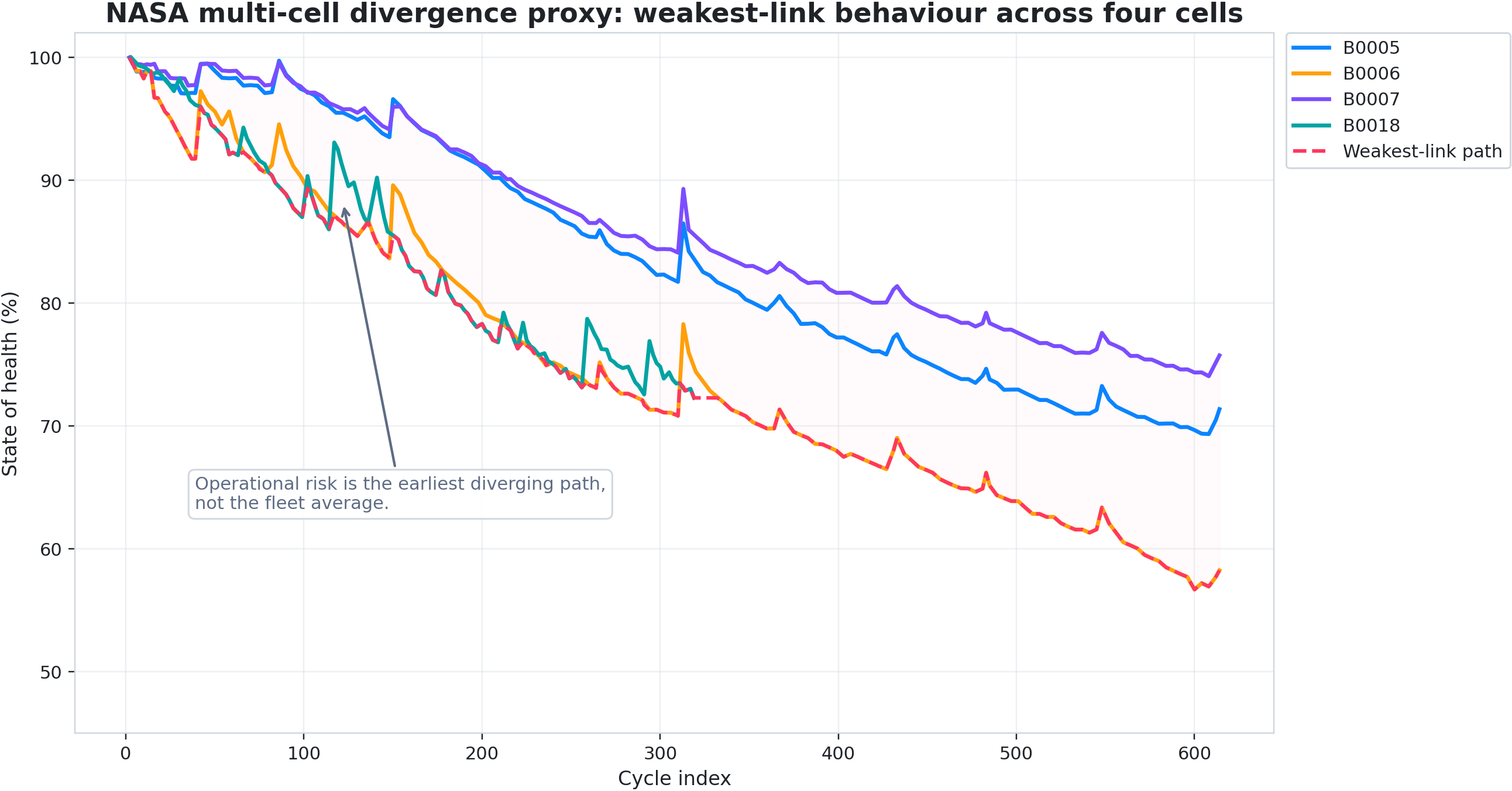
Divergence before diagnosis

Spread and divergence are often the first credible clue that one string or subsystem is beginning to drag the rest.

Dataset

NASA PCoE Battery Dataset

Evidence reference

NASA Weakest Link Divergence

Read telemetry sequence
ANOMALY PRECURSOR
NASAPrecursor

Resistance and precursor logic.

Precursor sequence

Thermal precursor

Sequence-based early warning

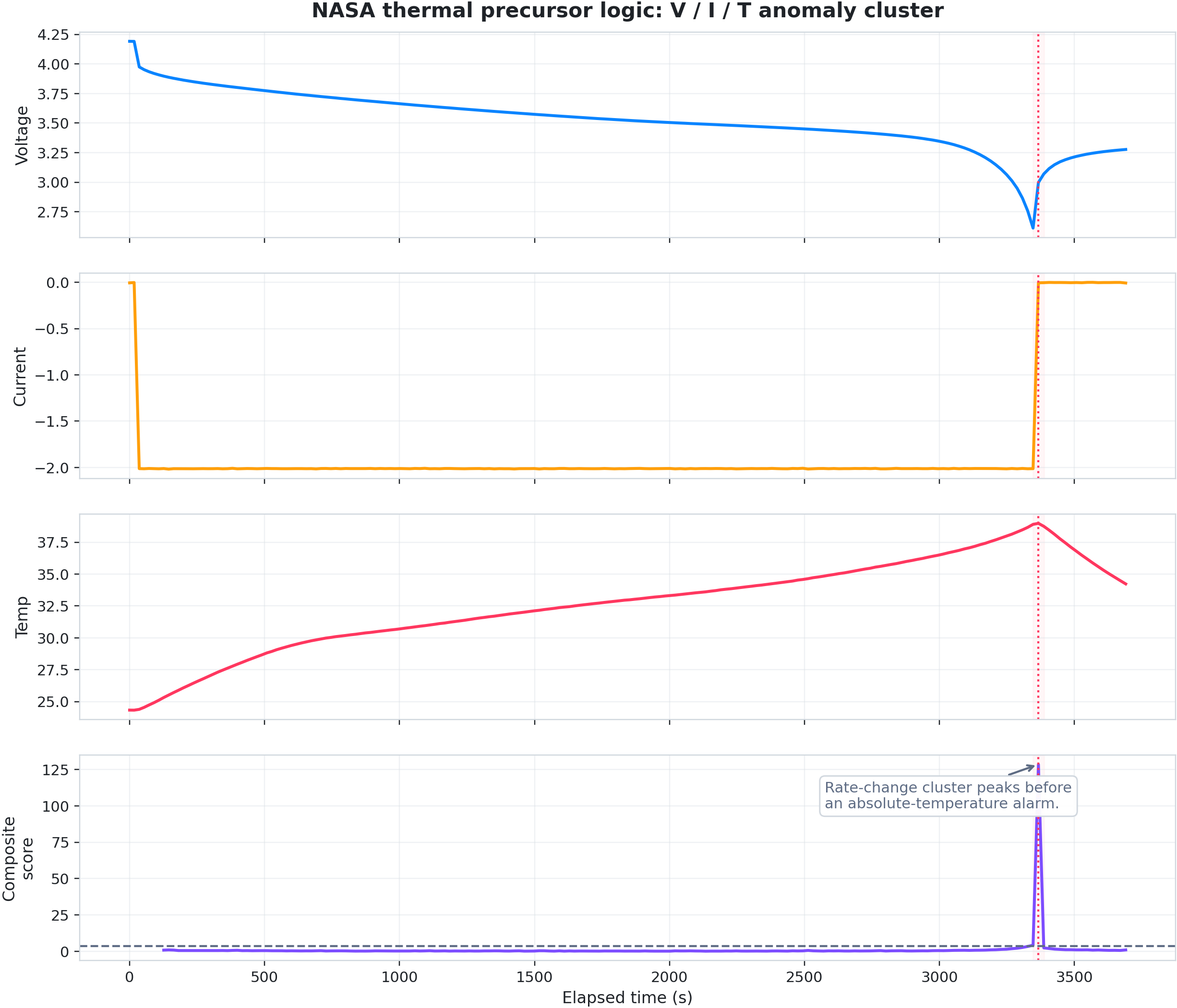
Resistance logic gets stronger when voltage, current, and temperature irregularities begin clustering in the same event window.

Dataset

NASA PCoE Battery Dataset

Evidence reference

NASA Thermal Precursor

Inspect chart atlas

Stress sequence, full scale

Resistance is strongest when the reader can inspect the whole stress sequence.

The public evidence works best when resistance trend, precursor logic, and weakest-link drag are visible together as one coherent forensic layer rather than three separate buzzwords.

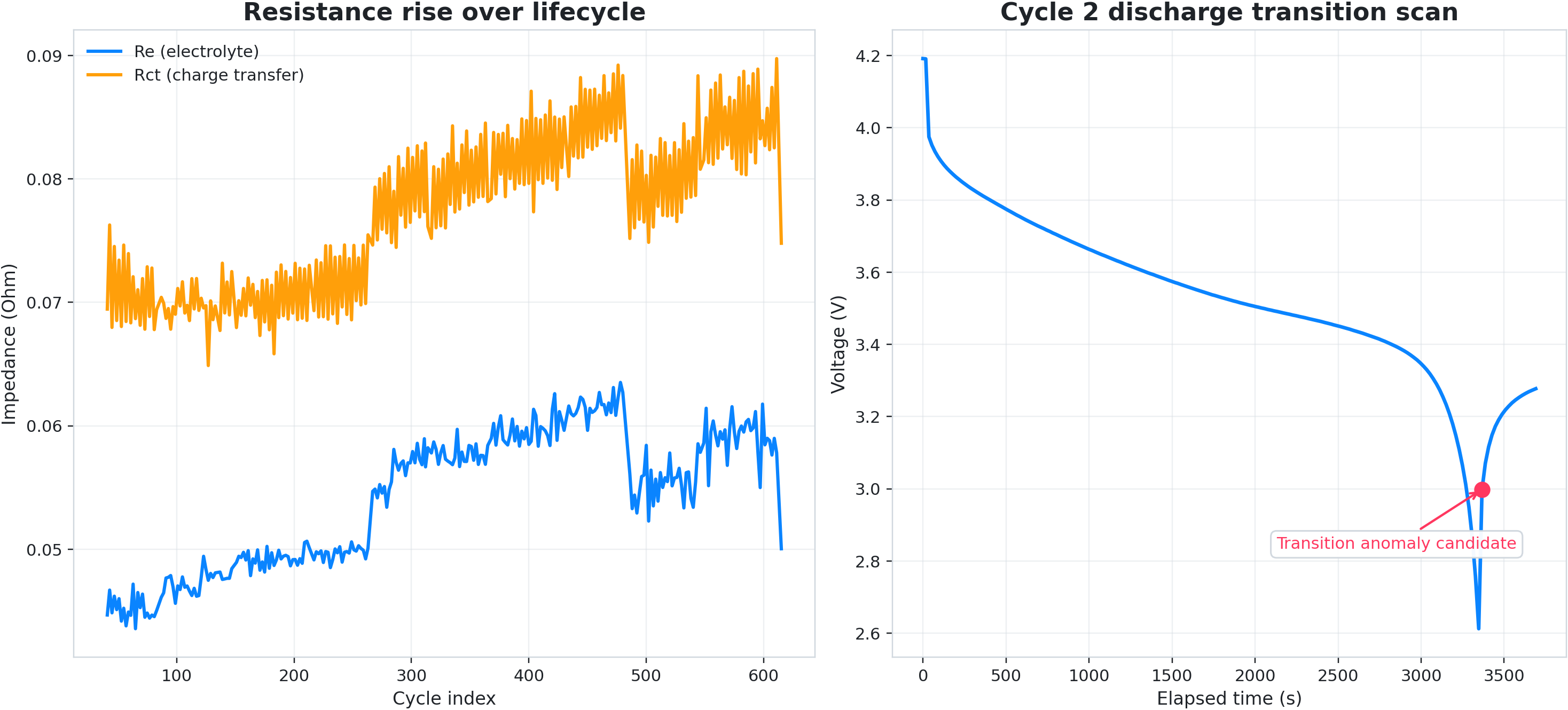
NASA / DCIR

Resistance rise and transition scan

The anchor chart for stress, abnormal transitions, and the early-warning electrical layer that matters in post-COD review.

Dataset anchor

NASA PCoE Battery Dataset

Evidence reference

NASA Resistance Transition
NASA / anomaly

Thermal precursor sequence

Resistance becomes more decision-grade when voltage, current, and temperature irregularities begin clustering in the same event window.

Dataset anchor

NASA PCoE Battery Dataset

Evidence reference

NASA Thermal Precursor

Weakest-link

Fleet drag before a failure headline

The divergence layer that shows why one laggard string can become an operational problem before a capacity average looks dramatic.

Dataset anchor

NASA PCoE Battery Dataset

Evidence reference

NASA Weakest Link Divergence

Why it matters

Resistance rise translates into more heat generation, more stress under load, and less available power headroom. That makes it relevant not just for engineering review, but for safety posture, operating limits, and insurance conversations.

Where it fits commercially

DCIR is especially useful in post-COD review, warranty discussions, and any diligence pass where the buyer or owner needs to know whether the live battery is becoming more fragile than the reporting layer suggests.

How to use it correctly

DCIR is strongest when treated as a practical stress-and-safety layer, not as a standalone commercial verdict. It becomes more useful when linked to operating history, thermal behaviour, and whether the live asset still supports the resilience or revenue story being told around it.

That is why rising resistance is often more valuable in a post-COD or warranty context than in a superficial dashboard review. It can explain why a battery is becoming harder to trust before it becomes easy to dismiss.

Operating posture

Scope first

Defined review scope

Boundary, telemetry window, and mandate question are pinned down before conclusions move.

Encrypted handling

Protected review workflow

Review traffic and operating data are handled with encrypted transfer and controlled access.

Customer boundary

Customer-controlled deployment

Managed, private, and isolated deployment paths are available when the environment requires them.

Direct accountability

Principal sign-off

Technical accountability stays close to the method rather than disappearing into a generic workflow.