Oxaide
BESS-Specialist Forensic Review

Independent BESS diagnostics and forensic review for serious asset decisions

We review historical telemetry for investors, asset managers, and operating teams that need a clear answer quickly. Oxaide surfaces degradation, yield leakage, and failure patterns standard monitoring can miss, then returns a clear report in 5 business days.

Why BESS-first

Weak technical baselines get expensive quickly in storage. The same evidence can shape SPA terms, refinancing, warranty files, insurer review, and operating plans.

Send telemetry exports. We scope the review and return a clear report in 5 business days. Global execution, Singapore-headquartered.

5 business day reportFixed-scope entry pointUseable for diligence, warranty, or O&M
Proceed to Verify Checkout

Best self-checkout fit: one bounded telemetry slice, one live decision, one fixed-fee answer. Broader mandates should go through direct review.

Oxaide VerifyDefined forensic engagement5-day delivery

A clear path from raw telemetry to a usable BESS report.

Verify takes the raw evidence, rebuilds the asset history, isolates the degradation mode, and turns it into a report people can actually use.

Selected stage

Scope

Defined intake boundary

The full review path stays visible below. Select a stage if you want to inspect the detail more closely.

Stage 01 / 04

What enters review

Evidence intake

01Telemetry exports from the agreed asset block
02BMS / SCADA histories and operating context
03Warranty, diligence, or operating-risk question
04Named decision path and review boundary

Forensic kernel

Telemetry package accepted

Cell-level exports, BMS history, event context, and the mandate question are fixed before analysis starts.

Asset block

Container 01 · Inv-04

Telemetry window

180 days

Primary finding

DEFINED SCOPE
Telemetry export received
Asset boundary confirmed
Review path opened

Illustrative sample report

BESS forensic report

Findings, evidence basis, risk posture, and next-step recommendation arranged the way a real investment or operating review would need them.

Public edition

Cover finding

Usable capacity and stress signals no longer support the clean operating narrative.

Material
Executive finding and confidence posture
Evidence chain from telemetry to business impact
Recommended next move for diligence, warranty, or operating action

Evidence insert

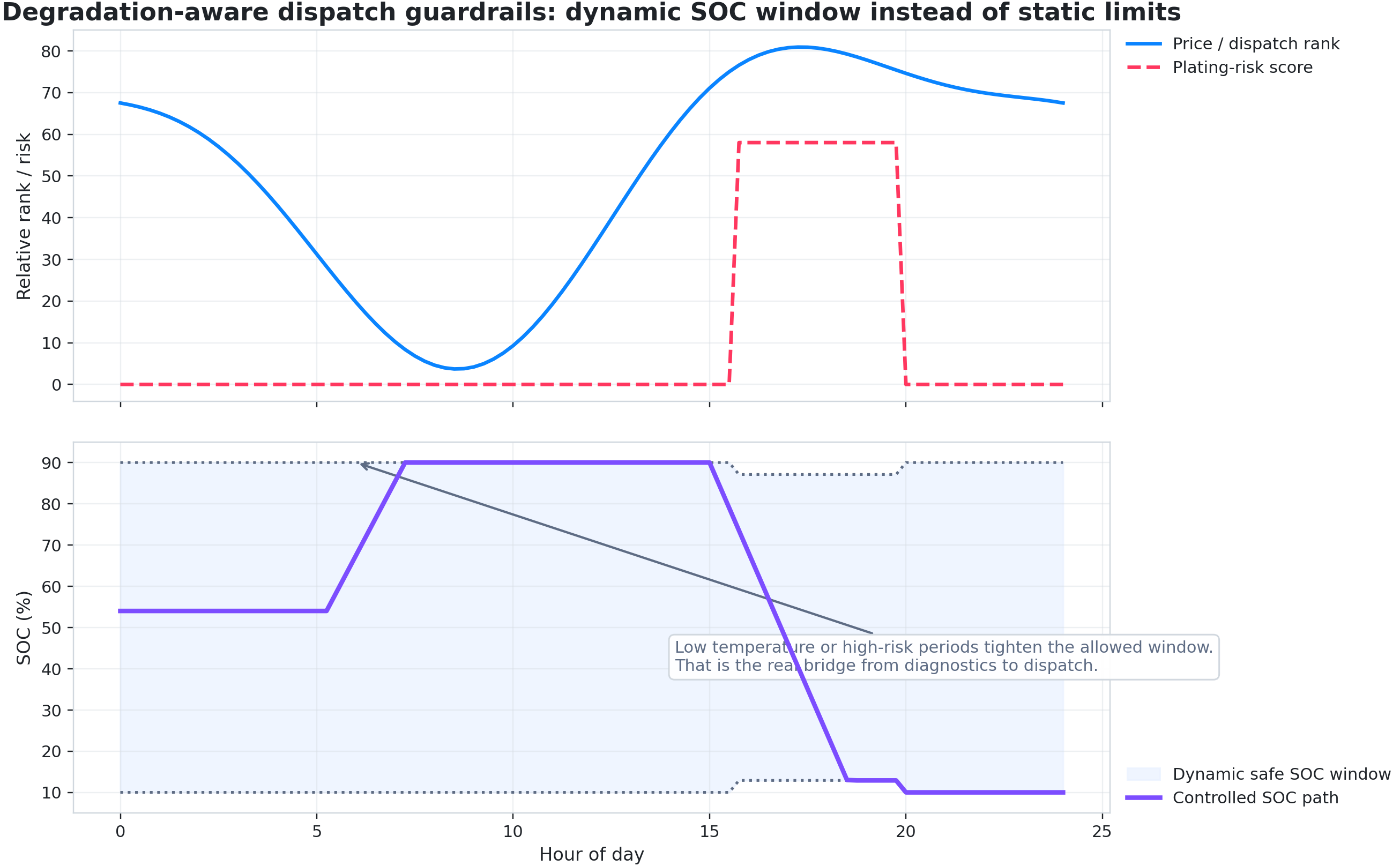
Dispatch guardrails excerpt

Appendix
Illustrative forensic report cover chart preview

The preview stays uncropped so you can actually read it. Open the full chart if you want a closer look.

Open sample page
Clear structureIllustrative sampleReview-ready format

Why this holds up

The deliverable is a forensic report with claim limits, evidence trail, and a clear next-step recommendation.
The review shows intake boundary, method logic, and report posture in one controlled frame.
Runtime monitoring and deployment topology belong to Horizon, not to this review surface.

Review stages

Select any stage to inspect that part of the review path.

Buyer outcomes

What teams actually do with a Verify report.

This is about making a cleaner acquisition, credit, warranty, insurer, or operating decision while there is still time to act.

Acquisition and refinancing decisions

Use the report to test usable capacity, degradation, and downside before pricing or lender papers harden.

Warranty and insurer positions

Use the evidence trail to frame claims, renewals, and underwriting around the physical asset rather than dashboard summaries.

Operating recovery plans

Use the findings to decide whether the next move is protocol change, further test, repair, or escalation.

Horizon qualification

Use Verify to decide whether the site actually earns a continuous monitoring layer or whether a one-off review is enough.

When teams commission a BESS forensic audit

  • Pre-acquisition or refinancing diligence on an operating BESS asset
  • A second opinion after OEM BMS health estimates stop matching field behaviour
  • Regulatory, insurer, or board-level scrutiny after safety incidents in your market
  • Unexplained availability loss, thermal excursions, clipping, or stack imbalance

What the audit gives you

  • Degradation-mode identification: plating, fade, impedance rise, clipping, imbalance
  • Evidence trail suitable for IC papers, SPA terms, insurers, warranty files, or procurement reviewers
  • Clear next-step recommendation: continue operation, change protocol, repair, or escalate
  • Internal links to validation studies and region-specific guidance for follow-up review

Method evidence

If you are comparing firms for a BESS forensic audit, the question is simple: who can show you the physics, the evidence trail, and the operating impact, rather than another dashboard screenshot? That is the standard Oxaide should meet.

Independent forensic layer

Use the actual evidence when the page is arguing for audit quality.

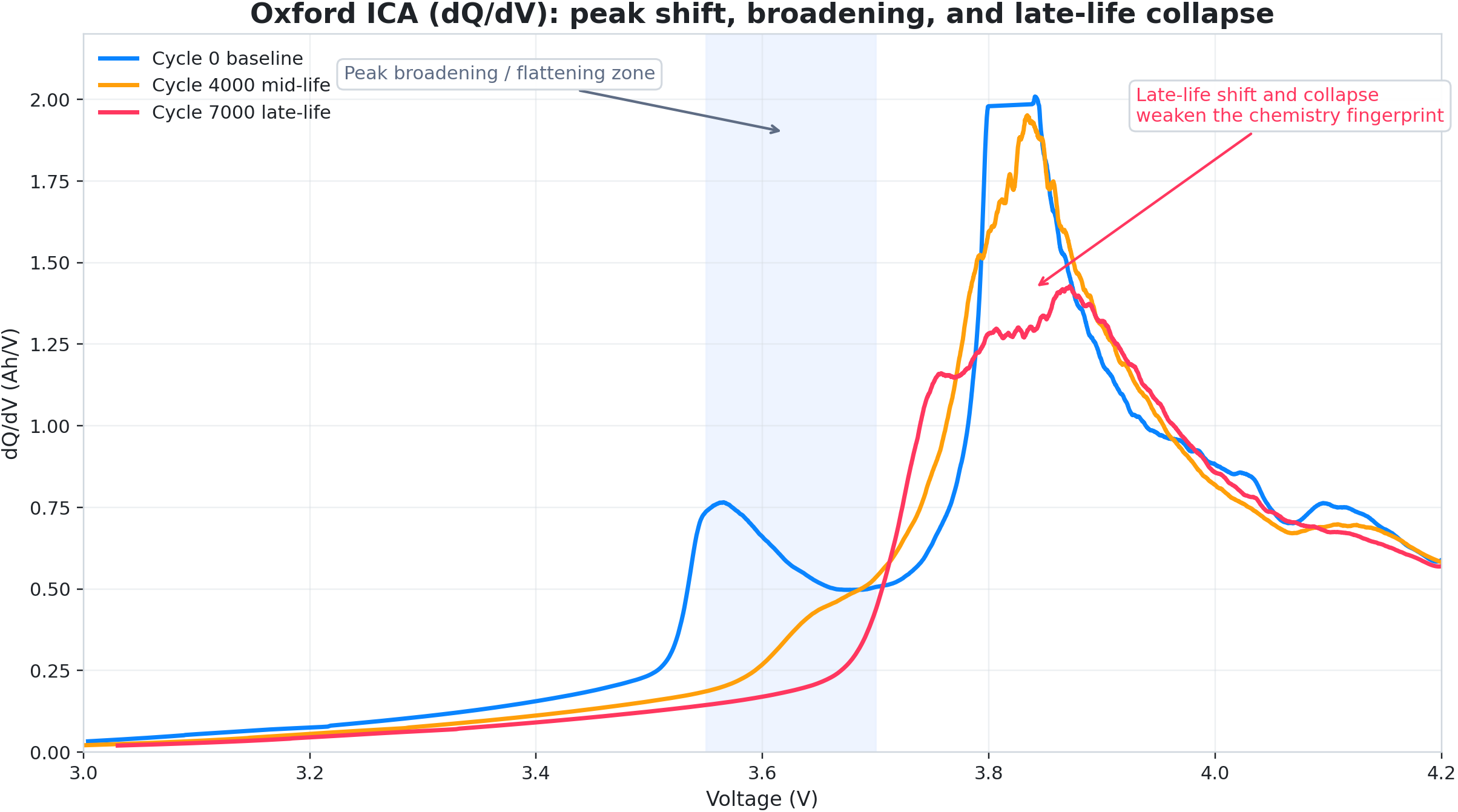
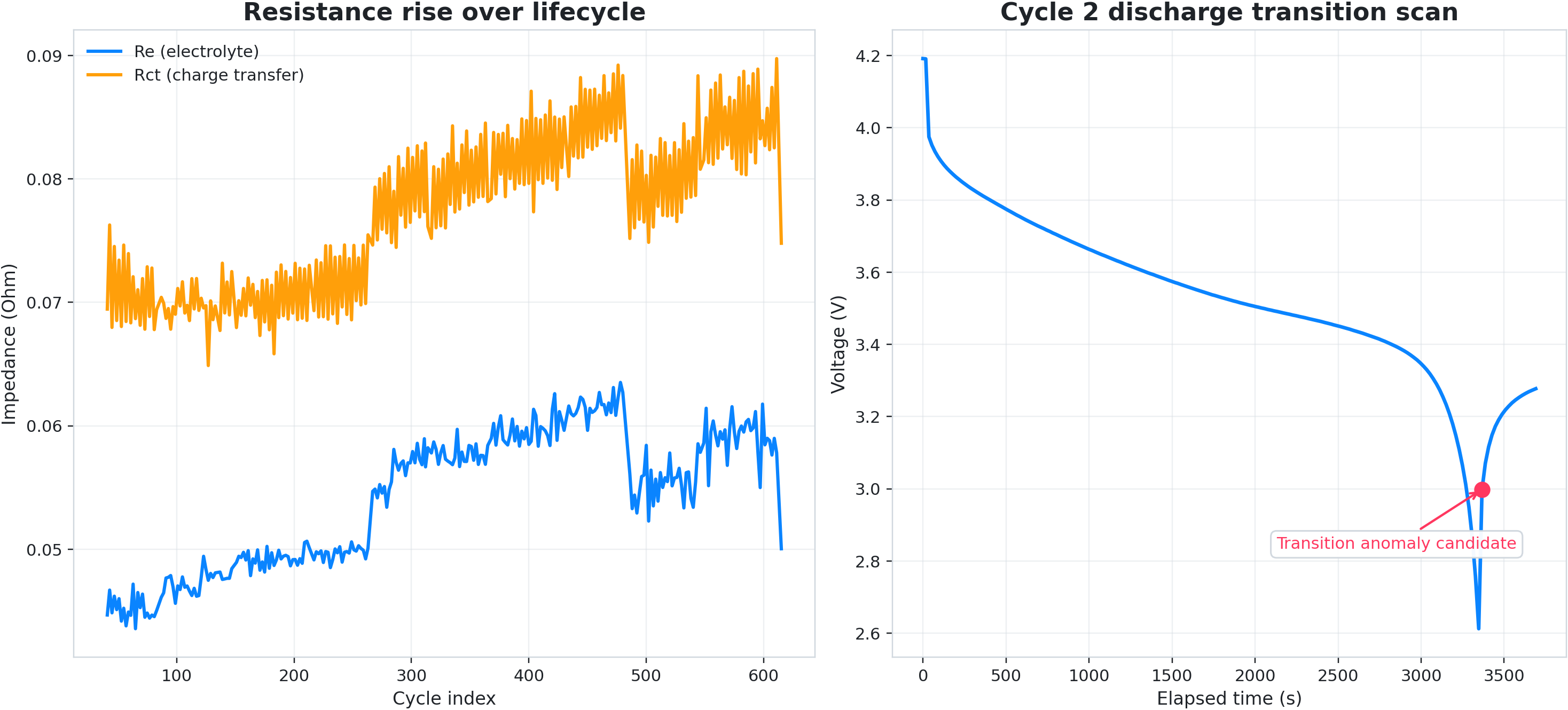
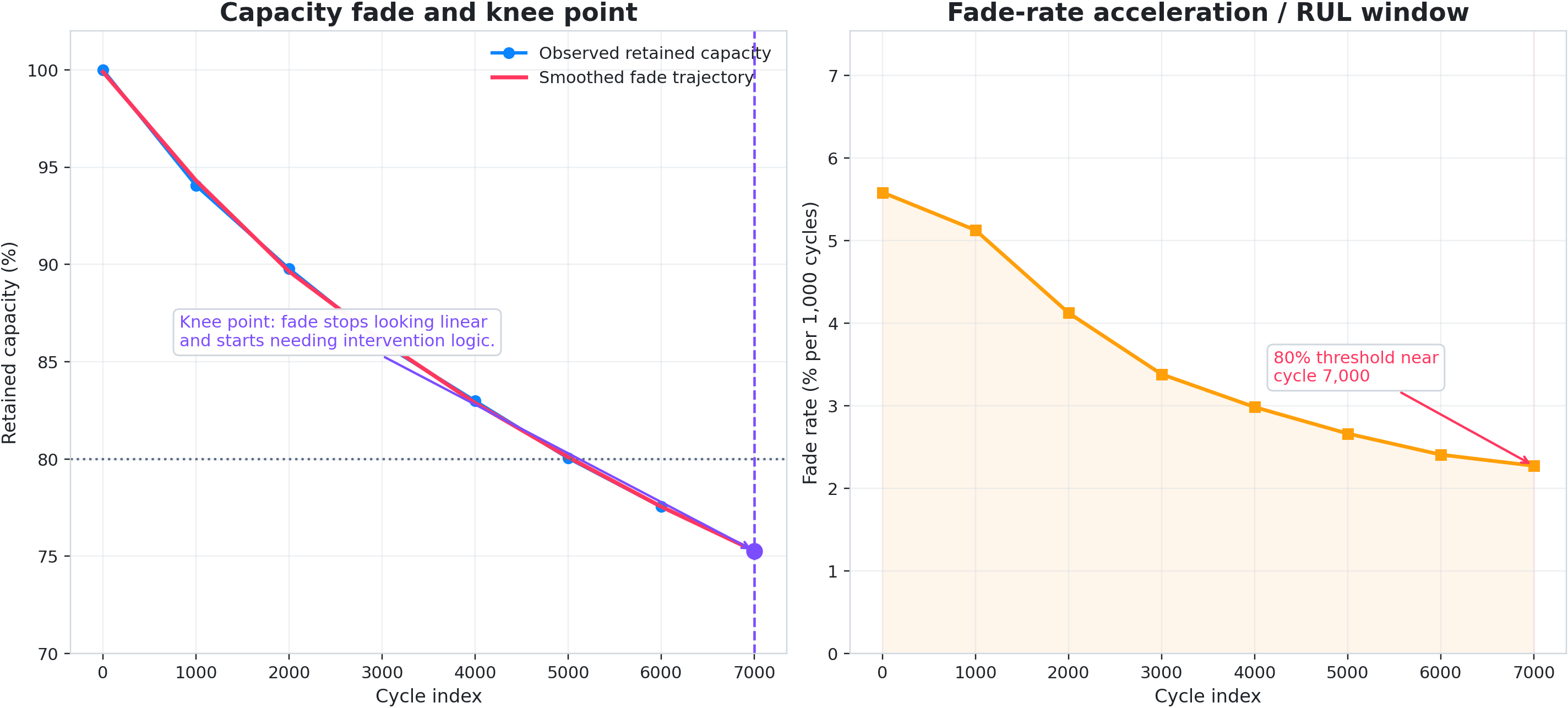
These are the four public benchmark visuals that best show the Oxaide wedge: chemistry signal, stress sequence, knee-point / RUL framing, and the operating consequence. That is the layer between generic dashboard land and lab-only science theatre.

Oxford / ICA

Chemistry signal before the committee story

Start with the derivative fingerprint that shows whether the electrochemical story is as clean as the commercial story implies.

Dataset anchor

Oxford Battery Degradation Dataset

Evidence reference

Oxford ICA Peak Shift

NASA / DCIR

Stress sequence before a dashboard excuse

Resistance and abnormal transition logic matter because fragility often appears before the headline KPI story breaks.

Dataset anchor

NASA PCoE Battery Dataset

Evidence reference

NASA Resistance Transition

Predictive maintenance

Knee-point and RUL framing

The independent forensic layer gets commercially useful when it shows whether the asset is still degrading gracefully or entering acceleration risk.

Dataset anchor

Oxford Battery Degradation Dataset

Evidence reference

Oxford Knee Point Rul

Dispatch / guardrails

Operating consequence, not science wallpaper

Diagnostics earn budget when they tighten or relax the operating envelope in a way the asset team can defend.

Dataset anchor

Derived public benchmark context

Evidence reference

Dispatch Guardrails

Verify process

What you are in for with Verify.

Defined scope. Historical telemetry. Independent review. Clear output.

Step 01

Define the asset block and mandate question

We align on one BESS block, the data window, and the commercial decision before conclusions move.

Step 02

Bring telemetry inside the agreed review boundary

Historical telemetry, BMS / SCADA exports, and context notes are handled inside the defined intake boundary.

Step 03

Run the forensic review and link it to the decision

We test degradation, resistance pressure, derating, imbalance, and anomaly patterns, then explain what they mean for the decision.

Step 04

Receive the report and next-step recommendation

You get a clear written report within 5 business days, plus next actions and follow-on scope options.

Engagement model

Verify is fixed-scope. Horizon starts from a scoped pilot.

We publish the exact Verify fee because the starting scope is bounded. Horizon shows a starting fee because telemetry path, deployment boundary, and reporting needs materially change the pilot shape.

Commercial comparison

If the real question is dashboard, spreadsheet, or forensic review, make that choice explicit.

Many teams are not really shopping for monitoring software. They are trying to answer a diligence, warranty, lender, insurer, or revenue-risk question fast enough to matter. That is why the difference between a one-off forensic review and continuous monitoring should be stated plainly.

The Oxaide Approach

A serious review for asset decisions.
Defined scope, careful handling, and a report teams can use

A bounded review for teams that need a usable written answer quickly.

Time to answer

The Oxaide Way
Clear answer in days

Turn telemetry into a technical position fast.

The Industry Standard
Extended analysis cycle

Meetings and spreadsheet churn delay the answer.

Data handling

The Oxaide Way
Controlled from intake to report

Careful intake and handling that respect the site boundary.

The Industry Standard
Generic upload workflow

Standard cloud flow before the posture is agreed.

Commercial fit

The Oxaide Way
Fixed scope. Clear report.

Decision-ready output instead of an open-ended advisory loop.

The Industry Standard
Unclear scope expansion

Time and cost grow before the recommendation lands.

FAQ

Questions behind most BESS diagnostics, audit, and forensic requests

What do buyers usually do with a Verify report?

Typical uses include SPA terms and reserves, lender or refinancing packs, warranty and insurer discussions, and O&M recovery plans when the commissioning narrative no longer matches the field data.

What does a BESS forensic audit usually need from the asset owner?

At minimum: telemetry exports, BMS or SCADA histories, asset context, and the operating question you need answered.

Is this only for utility-scale systems?

No. The same forensic review logic applies to utility, C&I, and infrastructure-adjacent systems when telemetry quality is sufficient.

Can this support procurement or compliance processes in different regions?

Yes. Verify can support internal approvals, risk reviews, lender or insurer conversations, and procurement documentation across multiple markets.

Principal Technical Briefing

Principal briefing:
Scope, method, and deployment posture

A concise principal-led briefing on what the work can support, how the method holds up, and where Verify and Horizon fit.

Review scope + sample outputs
Method stack + claim limits
Controls + deployment posture

Covers telemetry limits, main degradation and operating-risk patterns, plus how Verify and Horizon fit the engagement path.

Principal briefing10 pagesPublic edition
Oxaide institutional technical briefing cover for BESS diagnostics

Focus

BESS-First Review

Operating posture

Scope first

Defined review scope

Boundary, telemetry window, and mandate question are pinned down before conclusions move.

Encrypted handling

Protected review workflow

Review traffic and operating data are handled with encrypted transfer and controlled access.

Customer boundary

Customer-controlled deployment

Managed, private, and isolated deployment paths are available when the environment requires them.

Direct accountability

Principal sign-off

Technical accountability stays close to the method rather than disappearing into a generic workflow.