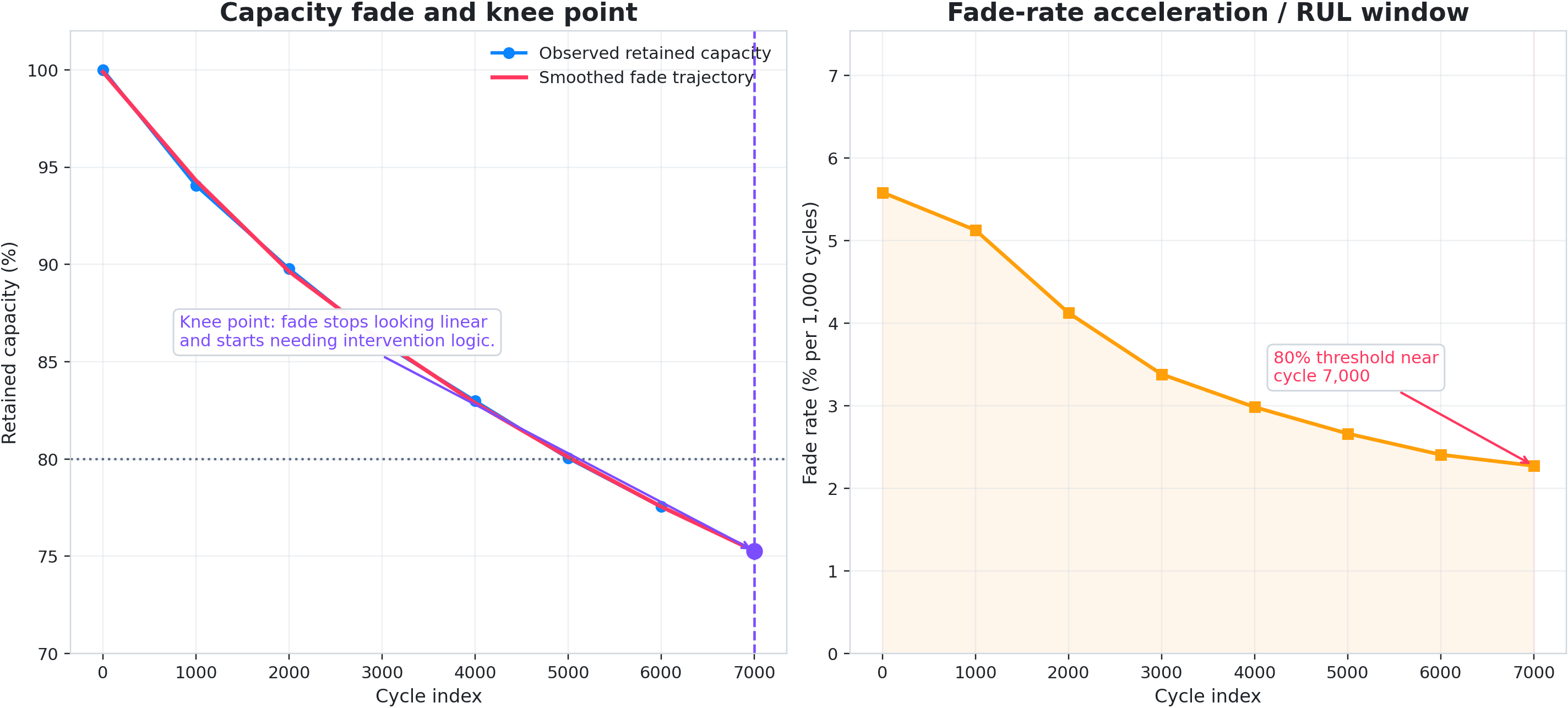
Knee-point and RUL work should be handled as slow-health evidence plus intervention timing. The point is not to bluff an exact replacement month. The point is to identify when linear fade is no longer a safe planning story.
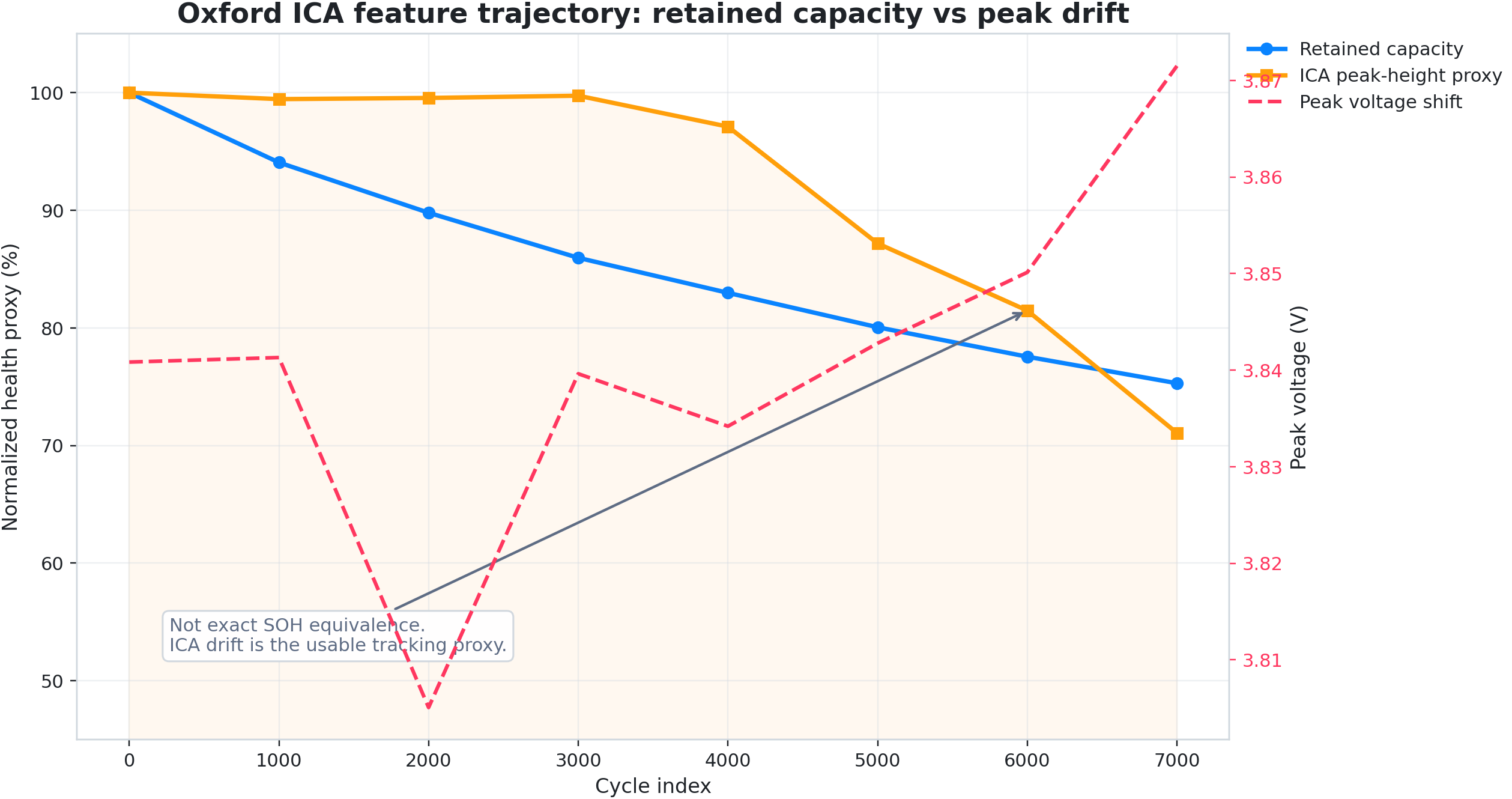
That means a serious review will usually combine retained-capacity trend, ICA feature drift, resistance rise, and duty-cycle context before promoting the result into predictive-maintenance language.
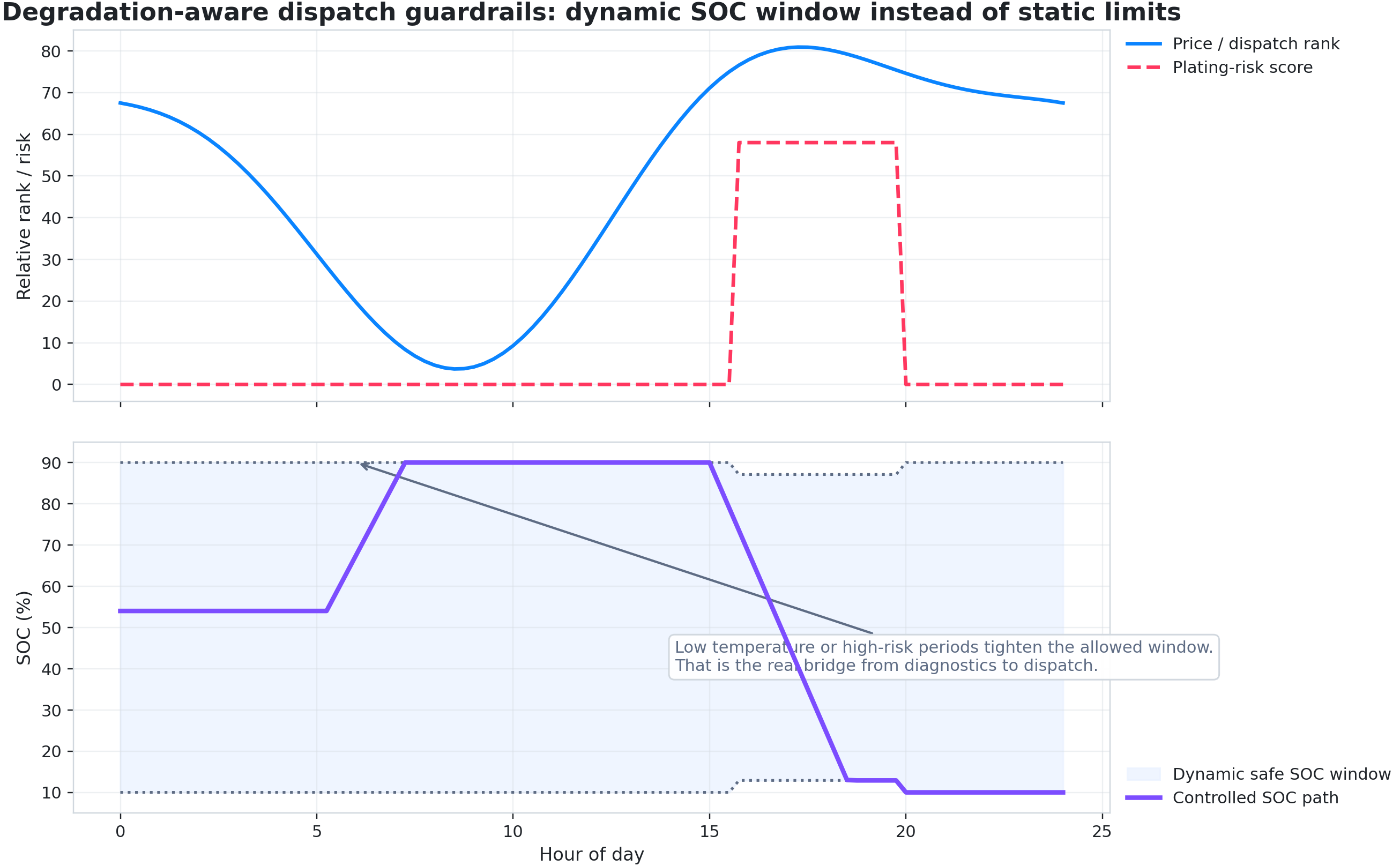
The independent forensic layer becomes valuable precisely because it can say: the chemistry is changing, the health trajectory is bending, and the operating or commercial answer should change with it.