Oxaide
Method layer

Incremental capacity analysis (dQ/dV) for utility-scale BESS review

Incremental capacity analysis is one of the clearest chemistry-fingerprint layers in the current Oxaide method set. In practical terms, it helps reviewers see whether a battery is aging the way the operating and commercial story implies, especially in LFP-first utility BESS contexts.

Oxford reference study

The current flagship visual for ICA-led BESS review

The Oxford visual gives buyers a clear first reference point for the method. The underlying chart detail still matters, but it belongs in the chart atlas, method study, and deeper technical review rather than in the opening frame alone.

Dataset anchor

Oxford Battery Degradation Dataset

Evidence reference

Oxford ICA Peak Shift

Why it matters

  • Shows knee-point transition and degradation-mode framing before the reader gets into the denser chart set.
  • Keeps the opening explanation clear while preserving the underlying chart provenance.
  • Supports one of the strongest current public method claims in the Oxaide stack: ICA-led lithium-ion review, especially in LFP-first utility BESS contexts.
Oxford dataset validation artwork for Oxaide incremental capacity analysis method page.

ICA evidence stack

Use the chemistry charts as readable evidence, not as decorative thumbnails.

The independent forensic layer gets stronger when ICA, DVA, and slow-health proxying are visible together. That shows method discipline instead of a single flagship curve doing too much rhetorical work.

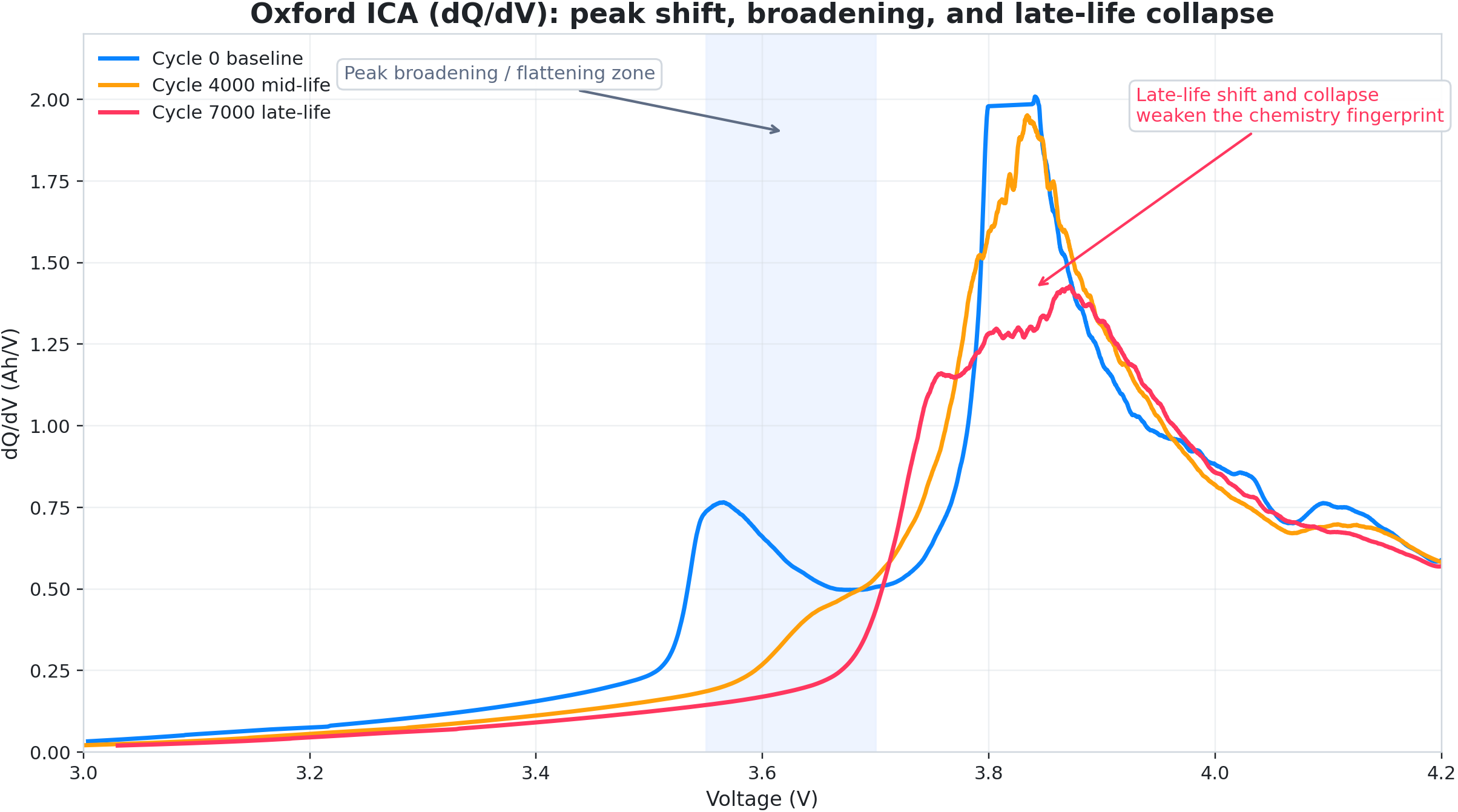
Oxford / ICA

Derivative fingerprint anchor

The flagship chemistry signal for reading peak shift, broadening, and late-life collapse before the commercial story gets lazy.

Dataset anchor

Oxford Battery Degradation Dataset

Evidence reference

Oxford ICA Peak Shift

Oxford / health

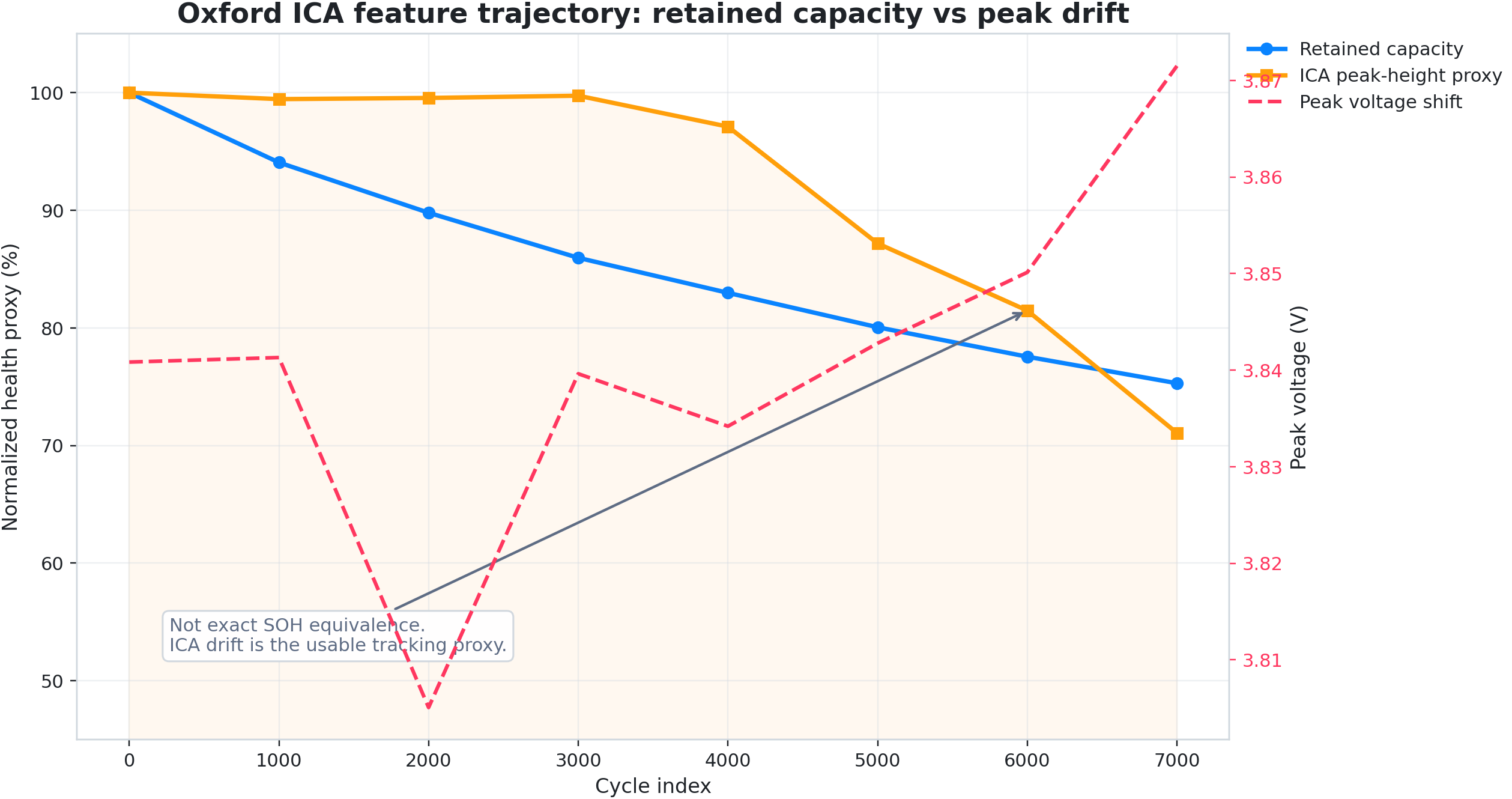
Feature drift into an SOH proxy

Show how ICA stops being a pretty chart and becomes a defensible slow-health trajectory when features are normalized properly.

Dataset anchor

Oxford Battery Degradation Dataset

Evidence reference

Oxford ICA Soh Proxy

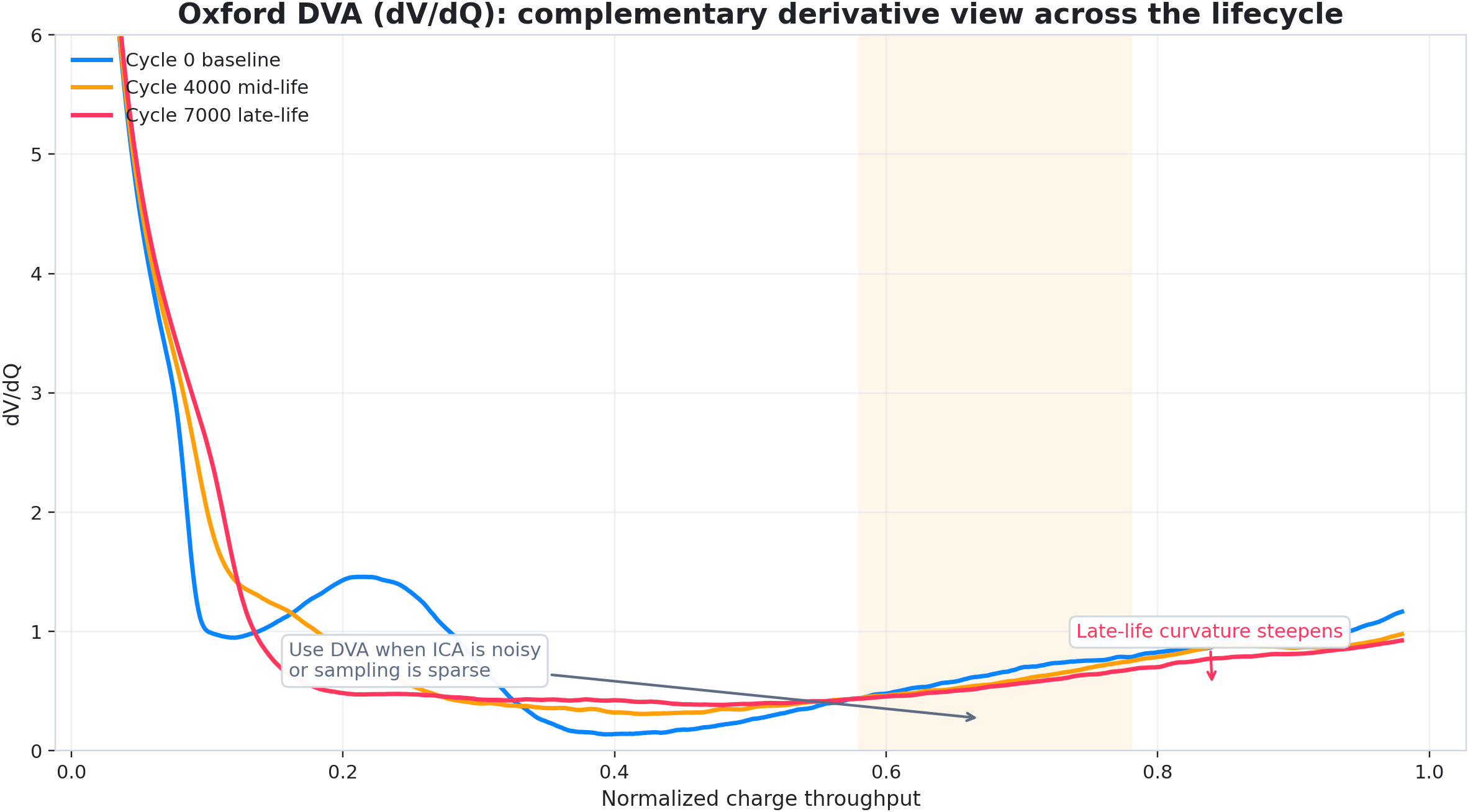
Oxford / DVA

Corroboration when ICA is fragile

The second derivative view that stops the flagship signal from becoming a one-chart overreach.

Dataset anchor

Oxford Battery Degradation Dataset

Evidence reference

Oxford DVA Mechanism

What it shows

How the battery’s internal fingerprint shifts as it ages, separating healthy behaviour from fade, stress, and chemistry patterns that summary dashboards flatten away.

Why buyers care

It helps buyers test whether reported health, usable capacity, and downside assumptions are credible enough for pricing, reserves, and post-close plans.

Where it is strongest today

The strongest current public support is lithium-ion, especially LFP-first positioning anchored by Oxford and related literature lineage.

Buyer-safe framing

Incremental capacity analysis is not magic. It is a method layer that becomes valuable when the review question is commercial: is the asset condition clean enough for the pricing, underwriting, warranty, or operating story attached to it?

It should not be sold as universal proof across every chemistry and every fleet. The buyer-safe claim is narrower and stronger: it is a leading diagnostic layer in the current lithium-ion proof stack, with especially strong relevance for LFP-first utility BESS positioning.

That is exactly why it works well inside independent due diligence, warranty review, and post-COD checks: it gives a reviewer a more defensible physical read than summary State-of-Health numbers alone.

Operating posture

Scope first

Defined review scope

Boundary, telemetry window, and mandate question are pinned down before conclusions move.

Encrypted handling

Protected review workflow

Review traffic and operating data are handled with encrypted transfer and controlled access.

Customer boundary

Customer-controlled deployment

Managed, private, and isolated deployment paths are available when the environment requires them.

Direct accountability

Principal sign-off

Technical accountability stays close to the method rather than disappearing into a generic workflow.