Oxaide
Benchmark chart atlas

The public chart atlas behind the current Oxaide BESS method stack

This page shows which charts sit underneath the current public method case, which benchmark datasets support them, and where public evidence ends and live-asset review begins.

Current benchmark stack

These are the method charts that matter most in the public Oxaide proof system right now.

The stack is intentionally narrow and disciplined: Oxford for derivative chemistry, NASA for divergence, resistance, anomaly, and precursor logic, plus operating-context charts that help translate signal into asset decisions.

Oxford / ICA

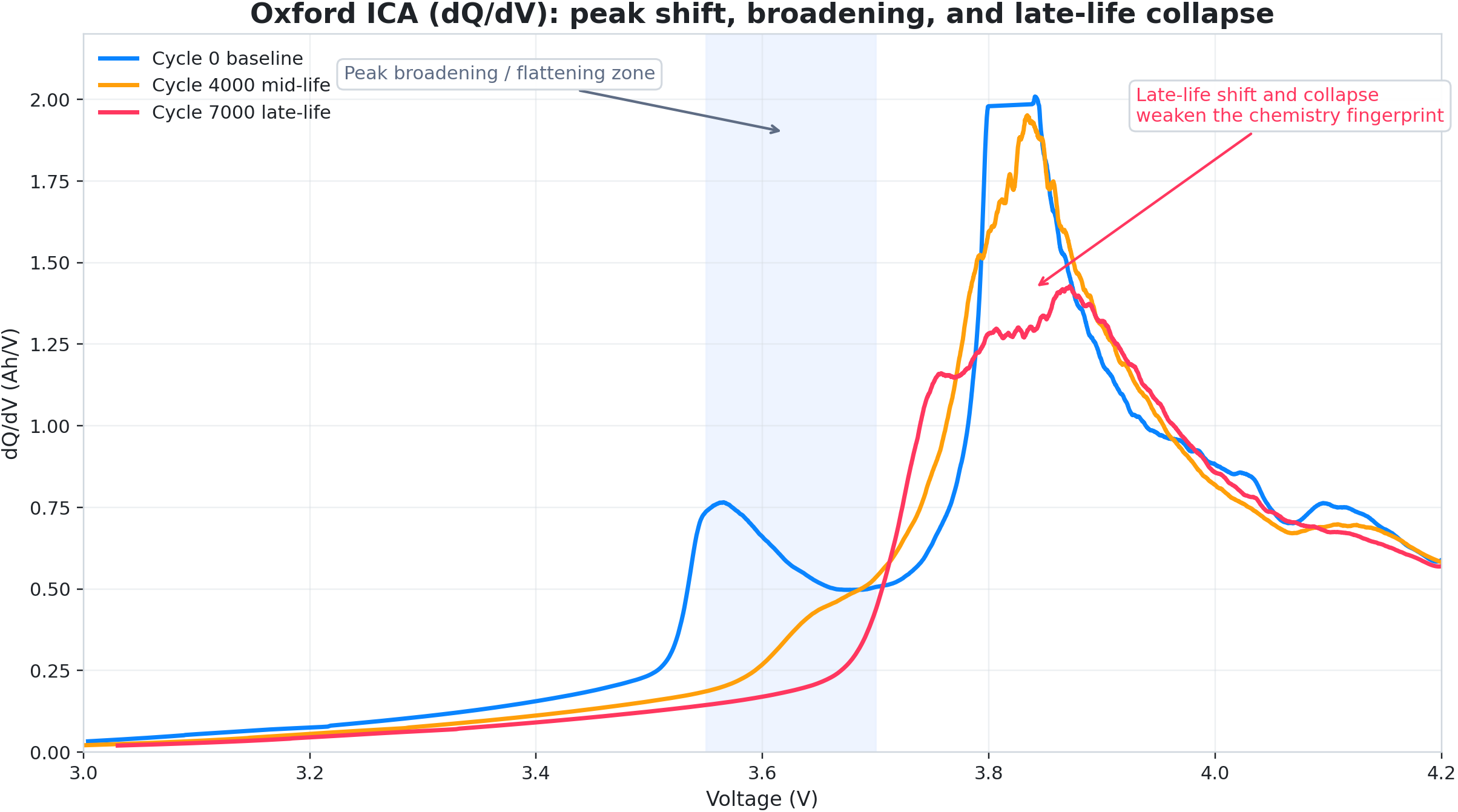
Peak shift, broadening, collapse

The flagship chemistry-fingerprint view for degradation interpretation and one of the strongest current public anchors for the method.

Dataset anchor

Oxford Battery Degradation Dataset

Evidence reference

Oxford ICA Peak Shift
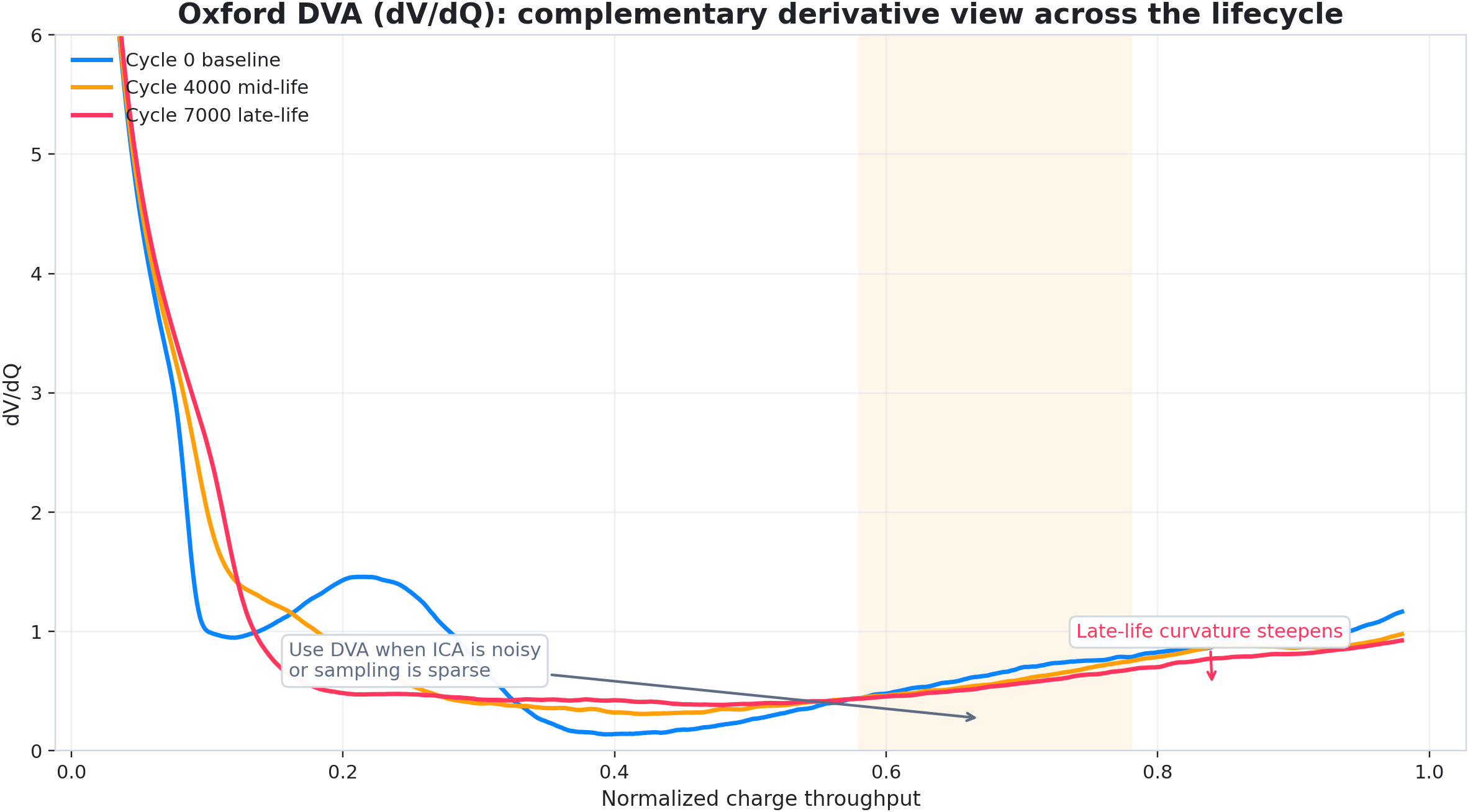
Oxford / DVA

Corroboration and fallback lens

The disciplined companion to ICA when the field dataset is too noisy or undersampled for a clean flagship read on its own.

Dataset anchor

Oxford Battery Degradation Dataset

Evidence reference

Oxford DVA Mechanism

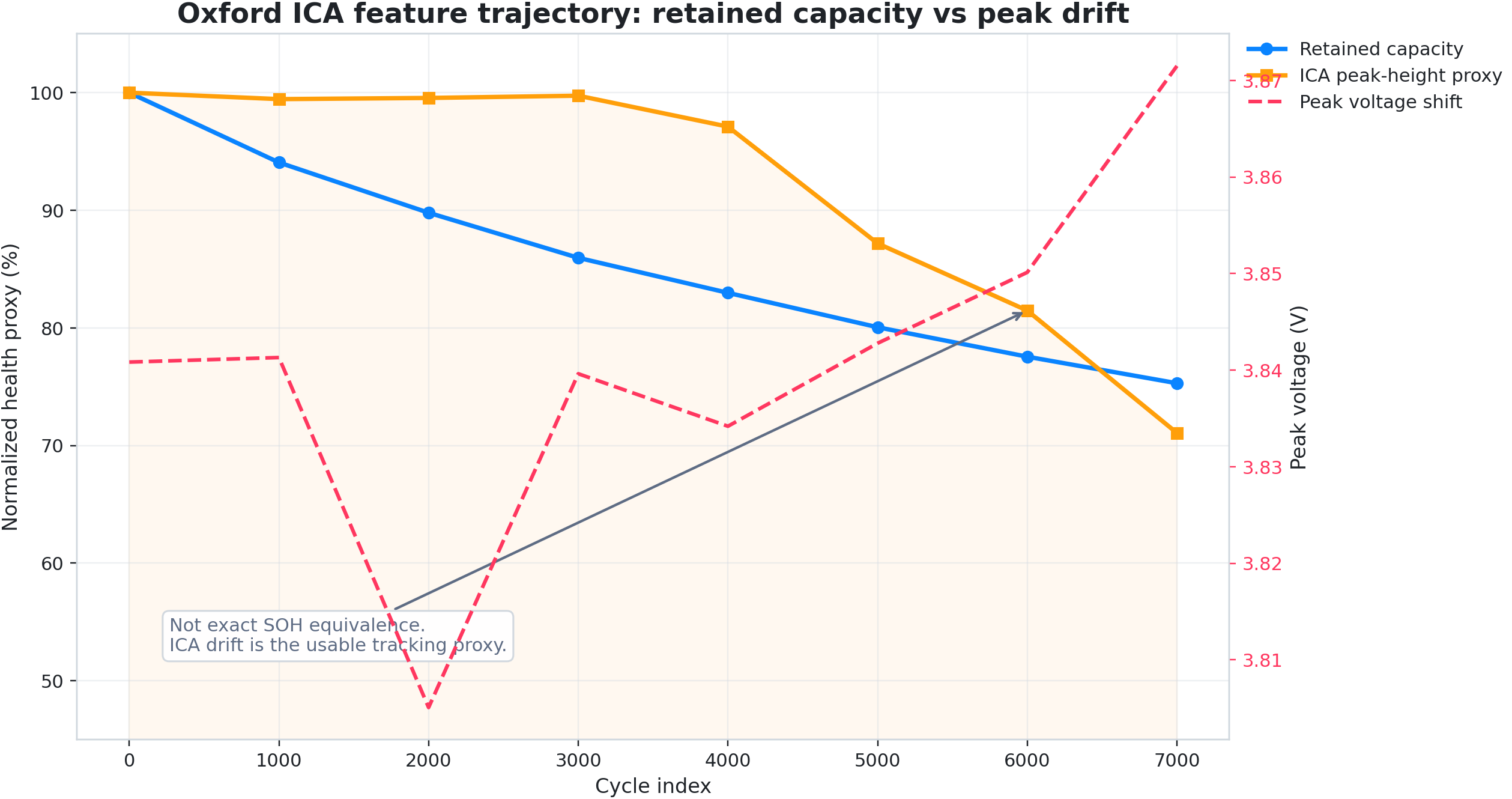
Oxford / health

ICA feature drift into SOH proxying

The bridge from derivative shape to a reusable health trajectory that can support slow-health estimation honestly.

Dataset anchor

Oxford Battery Degradation Dataset

Evidence reference

Oxford ICA Soh Proxy

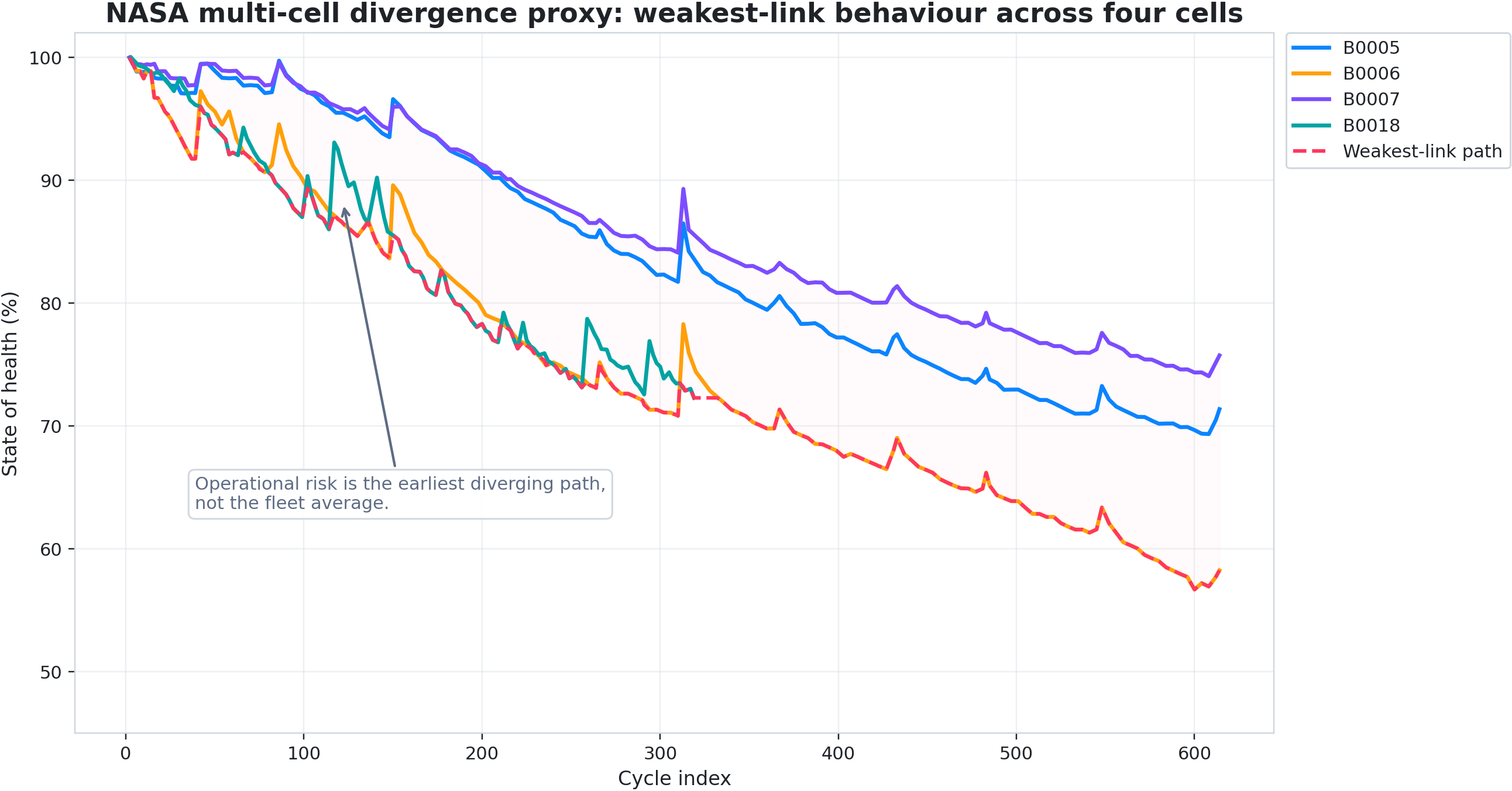
NASA / divergence

Weakest-link operational drag

The practical triage layer serious operators reach for before escalating into deeper chemistry claims.

Dataset anchor

NASA PCoE Battery Dataset

Evidence reference

NASA Weakest Link Divergence

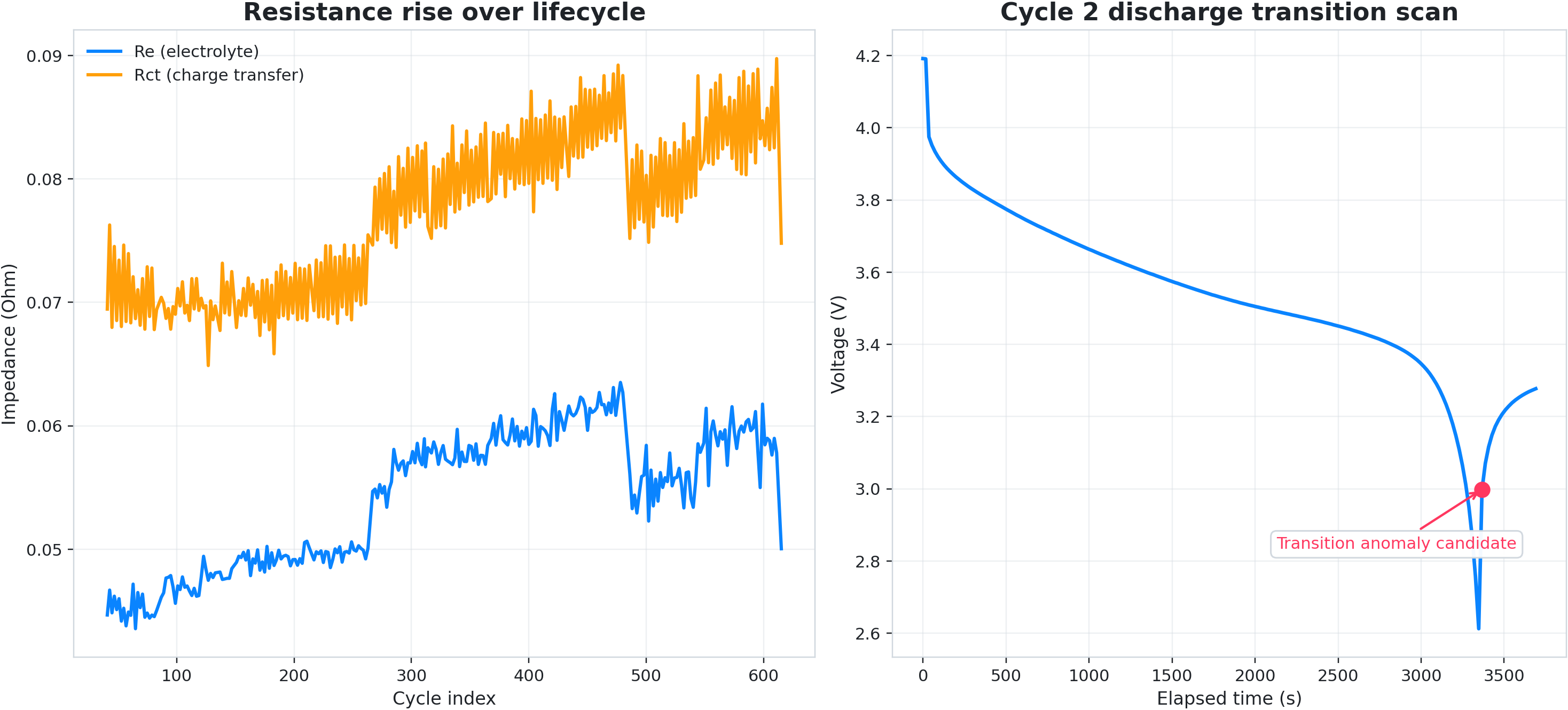
NASA / resistance

Transition and resistance stress

The abnormal electrical-behaviour layer that strengthens post-COD, warranty, and safety review before capacity metrics fully deteriorate.

Dataset anchor

NASA PCoE Battery Dataset

Evidence reference

NASA Resistance Transition

NASA / thermal

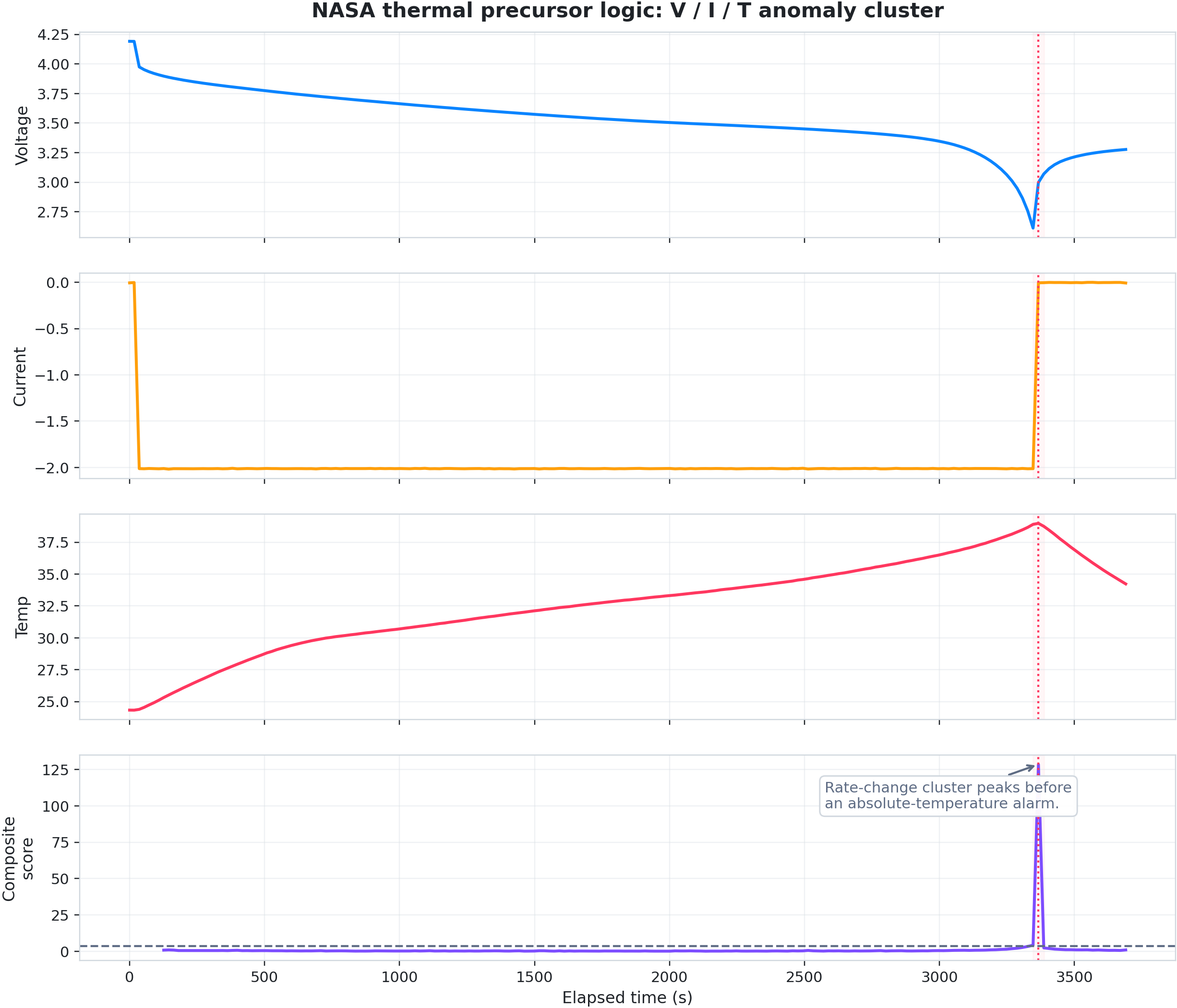
Thermal precursor sequence

The V / I / T clustering logic that helps justify operational attention before a conventional alarm story becomes easy to tell.

Dataset anchor

NASA PCoE Battery Dataset

Evidence reference

NASA Thermal Precursor

Fleet / triage

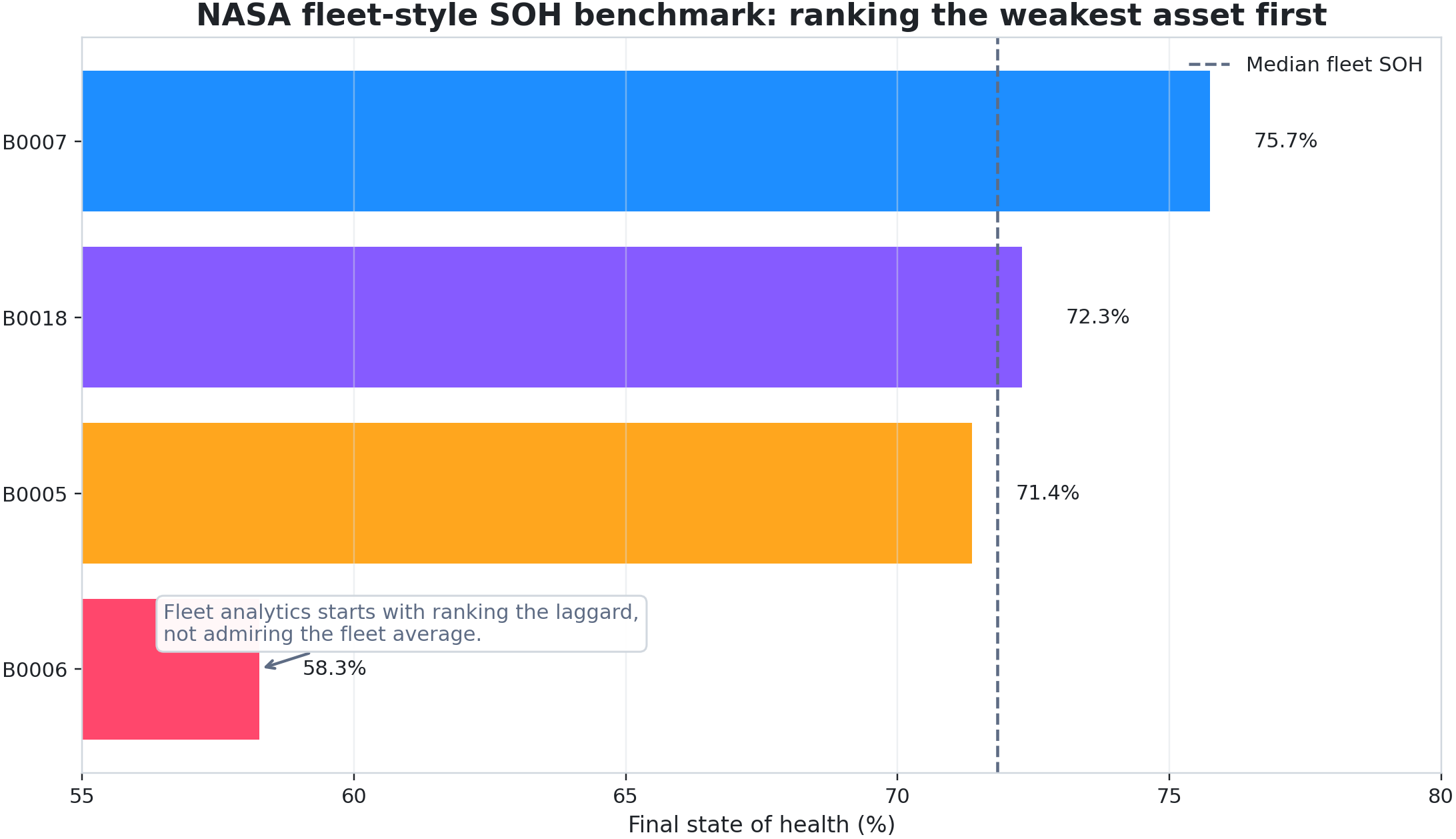
Fleet ranking before fleet dashboards

The ranking layer that tells you which asset becomes the intervention priority instead of hiding behind averages.

Dataset anchor

NASA PCoE Battery Dataset

Evidence reference

NASA Fleet Soh Benchmark

Predictive maintenance

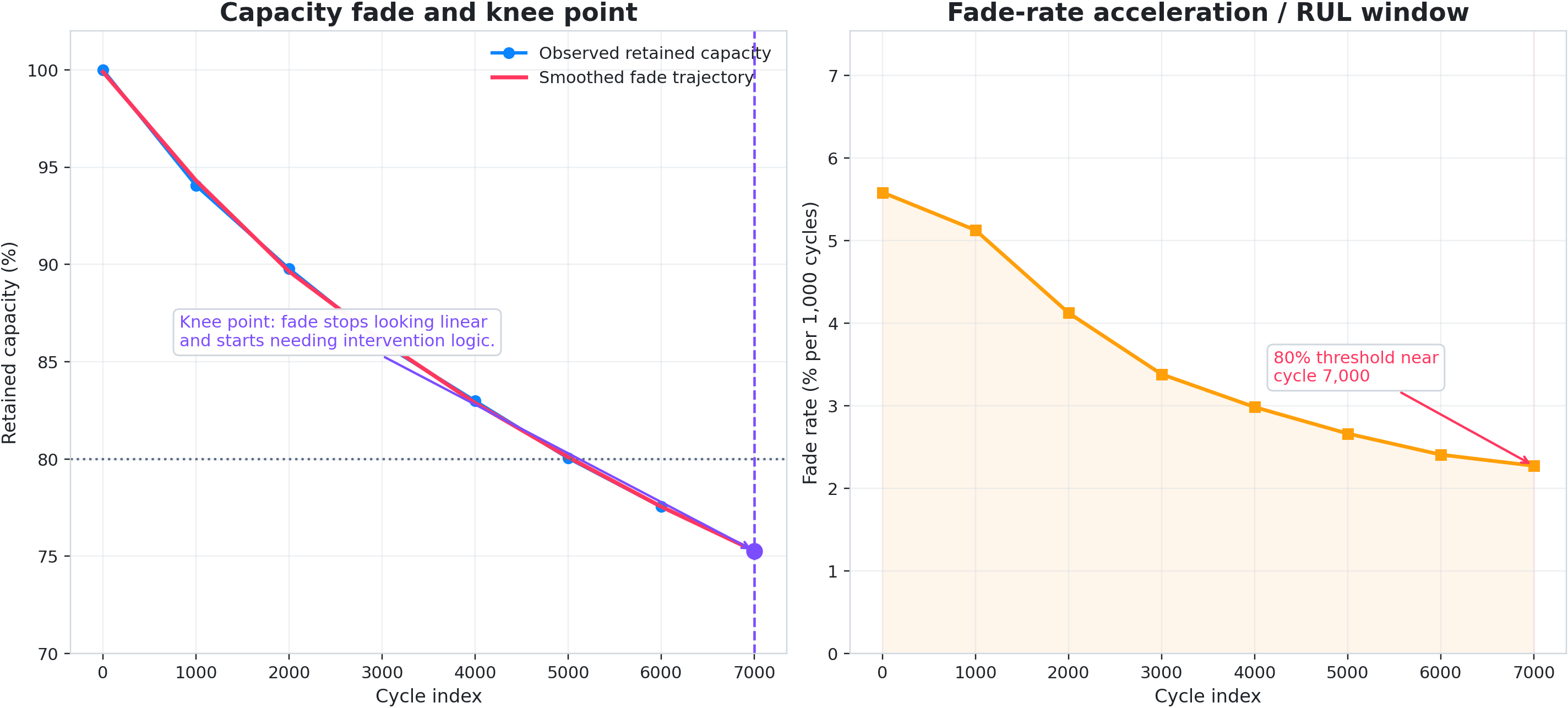
Knee-point and RUL framing

The cleanest public teaching chart for when a battery stops degrading gracefully and starts needing intervention-timing logic.

Dataset anchor

Oxford Battery Degradation Dataset

Evidence reference

Oxford Knee Point Rul

State estimation

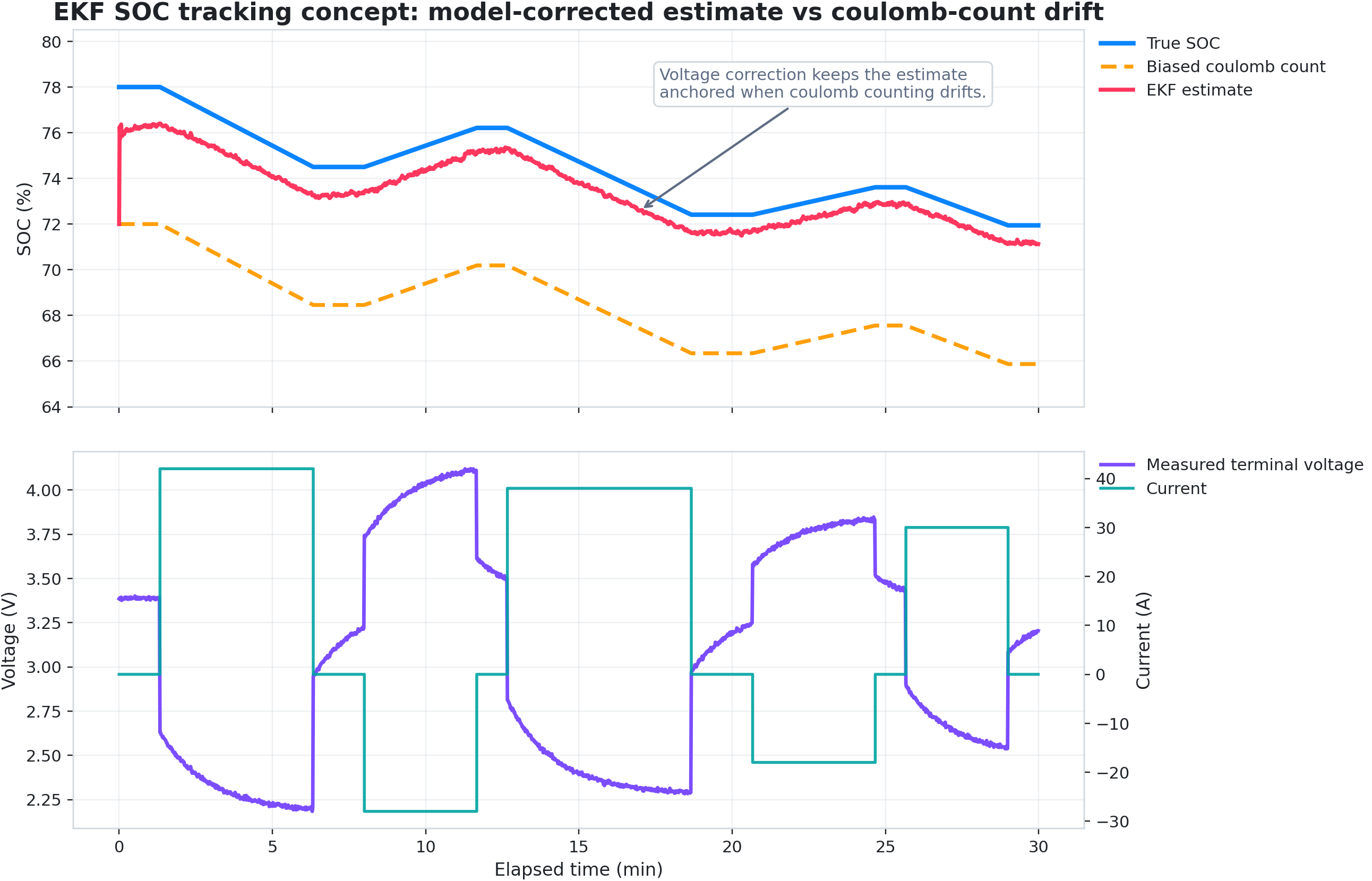
EKF SOC tracking in the fast loop

A practical reminder that observers belong in the live operational state layer, not as a fake substitute for chemistry diagnosis.

Dataset anchor

Derived equivalent-circuit teaching model

Evidence reference

Ekf Soc Tracking

Context / dispatch

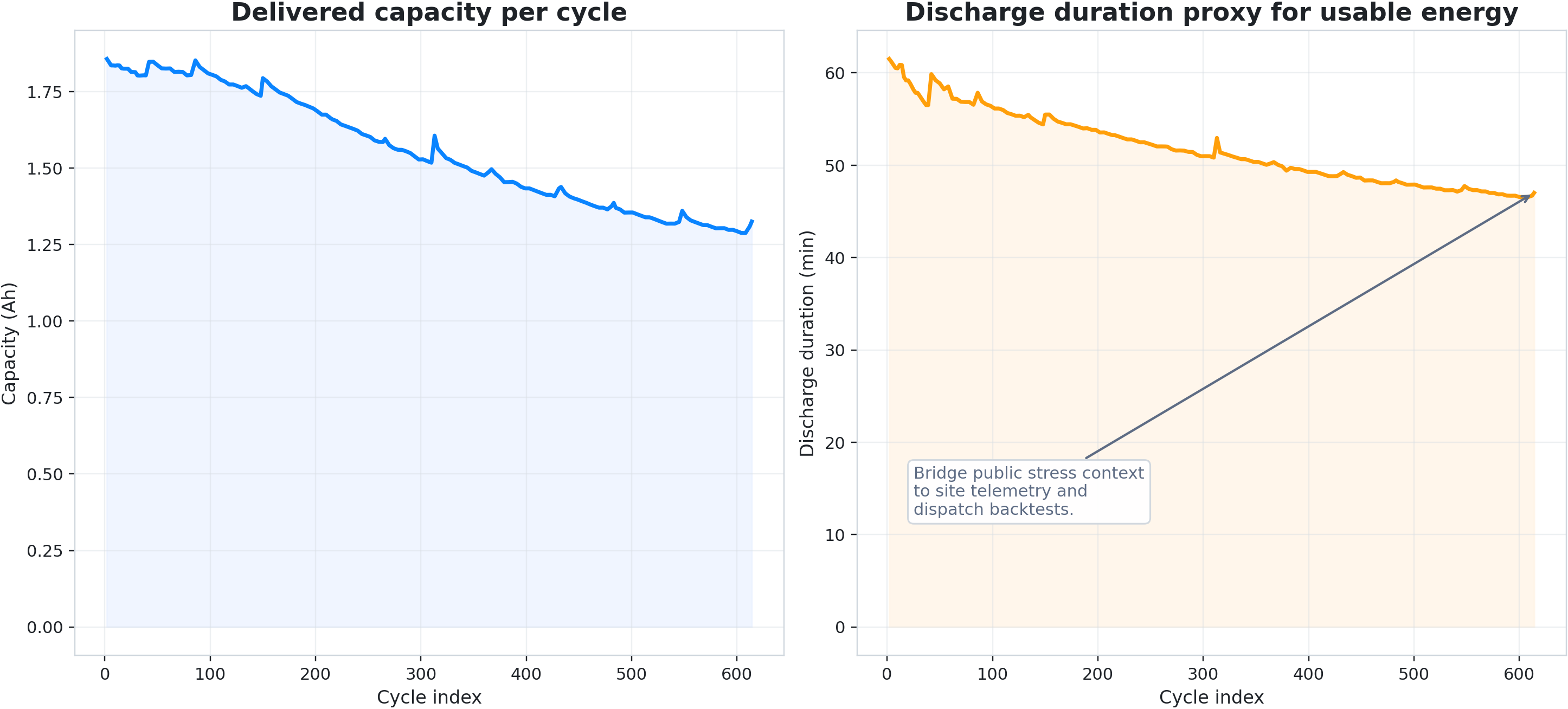
Stress regime before economics

The bridge from technical trend to dispatch quality, usable energy, and revenue language that serious battery capital work depends on.

Dataset anchor

NASA PCoE public benchmark context

Evidence reference

NASA Cycle Dispatch Context

Dispatch / guardrails

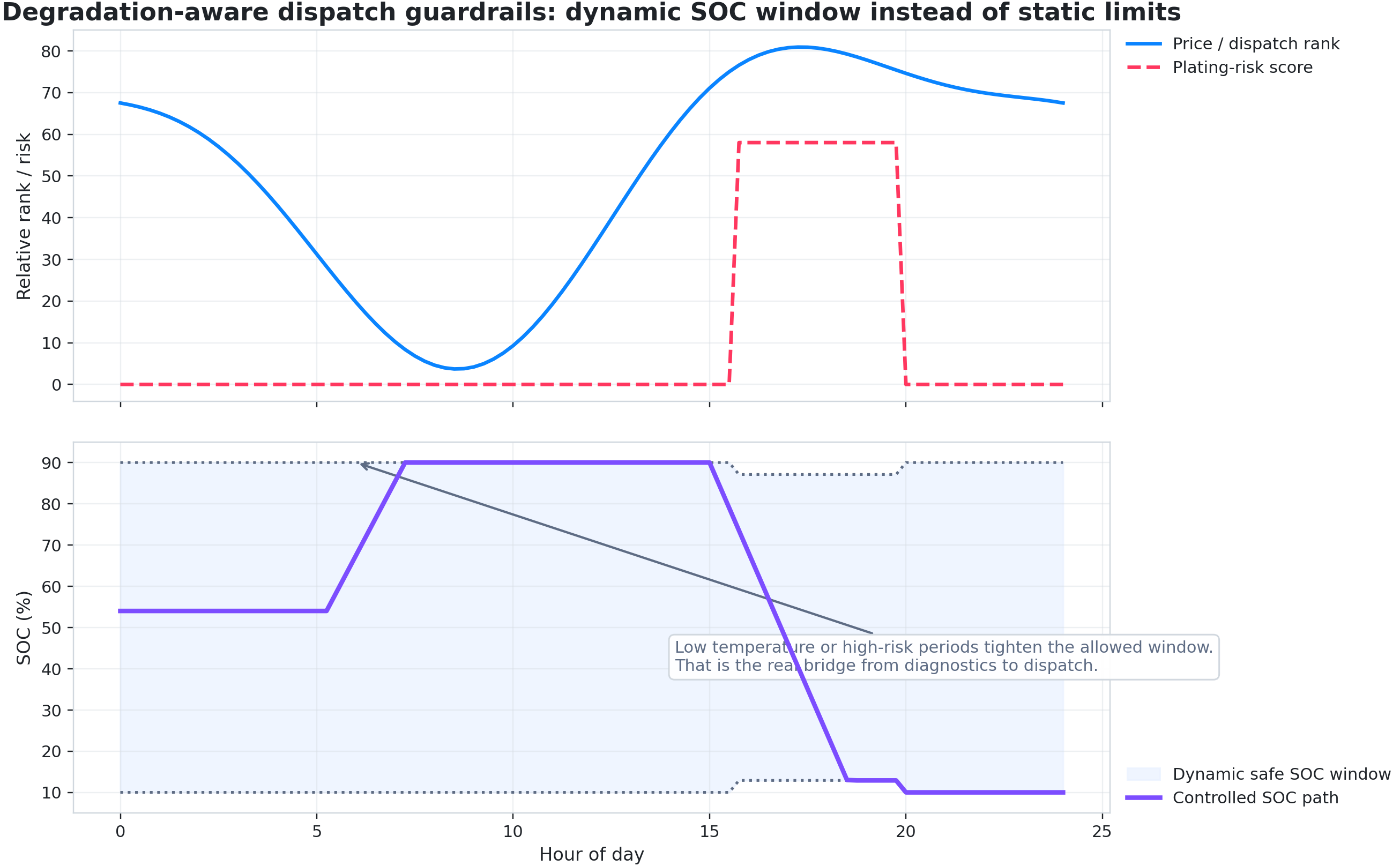
Dynamic operating envelope

The bridge from diagnostics and state estimation into dynamic SOC windows that management teams can actually use.

Dataset anchor

Derived public benchmark context

Evidence reference

Dispatch Guardrails

How to use this atlas correctly

These charts are public benchmark evidence. They show that the method logic is real, reproducible, and disciplined. They do not become evidence of live asset condition until site telemetry, operating history, and review scope are examined.

The strongest current public statement remains narrow and strong: Oxaide has a coherent, benchmark-backed method stack for independent BESS forensic review, with the best public support today in lithium-ion and especially LFP-first utility BESS contexts.

Operating posture

Scope first

Defined review scope

Boundary, telemetry window, and mandate question are pinned down before conclusions move.

Encrypted handling

Protected review workflow

Review traffic and operating data are handled with encrypted transfer and controlled access.

Customer boundary

Customer-controlled deployment

Managed, private, and isolated deployment paths are available when the environment requires them.

Direct accountability

Principal sign-off

Technical accountability stays close to the method rather than disappearing into a generic workflow.