Oxford / ICA
Chemistry stress before a plating claim
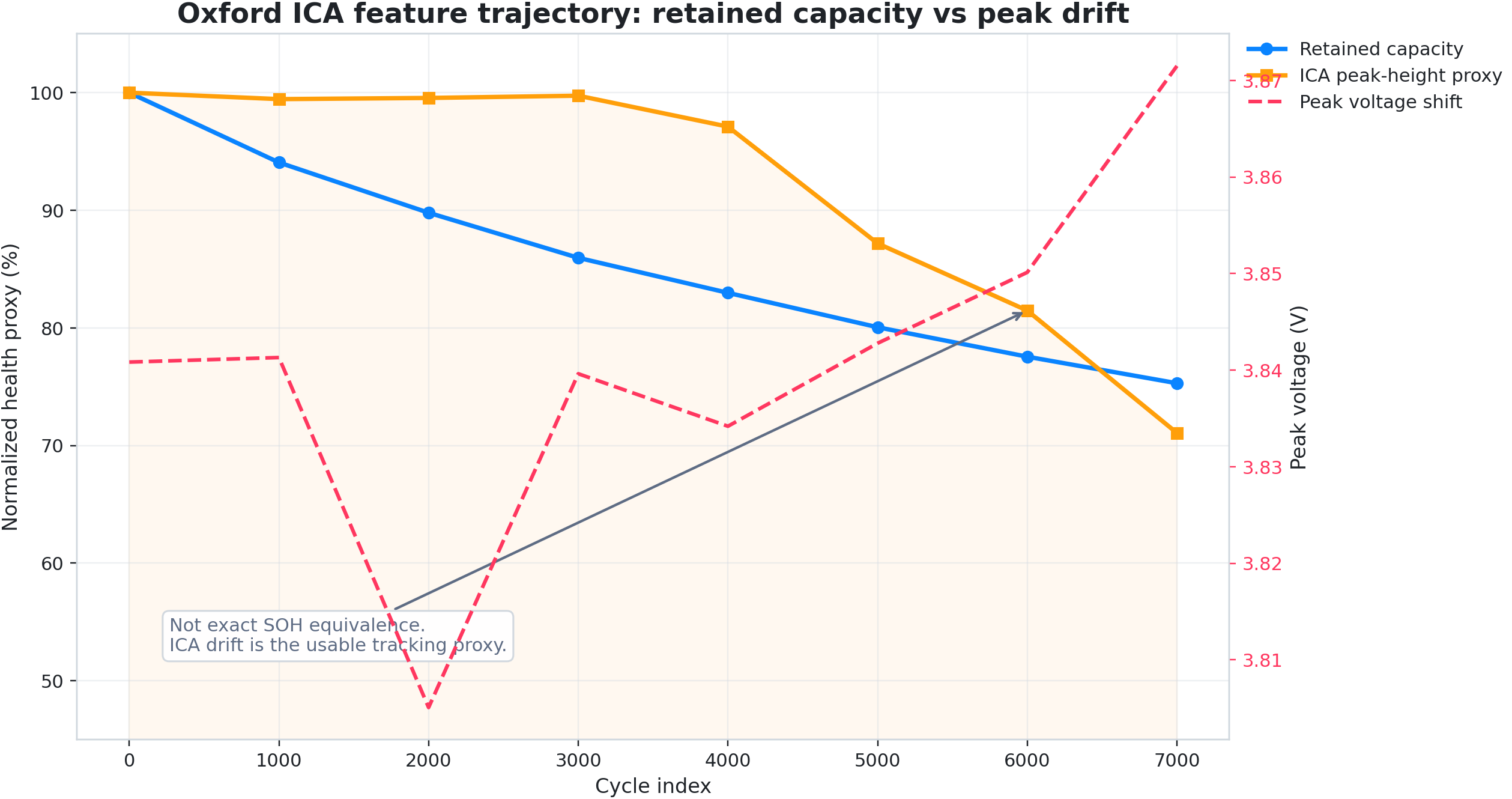
The chart that gives plating-risk language a serious electrochemical anchor instead of a theatrical one.
Dataset anchor
Oxford Battery Degradation Dataset
Evidence reference
Oxford ICA Peak Shift
Plating risk matters because it sits at the uncomfortable boundary between electrochemical stress and future operational trouble. The signal often appears before a team has a clean commercial story for why the battery feels less trustworthy.
Plating-risk framing
The right public posture is not to pretend every field signal proves plating with courtroom certainty. It is to show that the chemistry-fingerprint layer exists, that the Oxford lineage matters, and that Oxaide knows where to stop its claim before the report overreaches.
Dataset anchor
Oxford Battery Degradation Dataset
Evidence reference
Oxford ICA Peak Shift
Why it matters
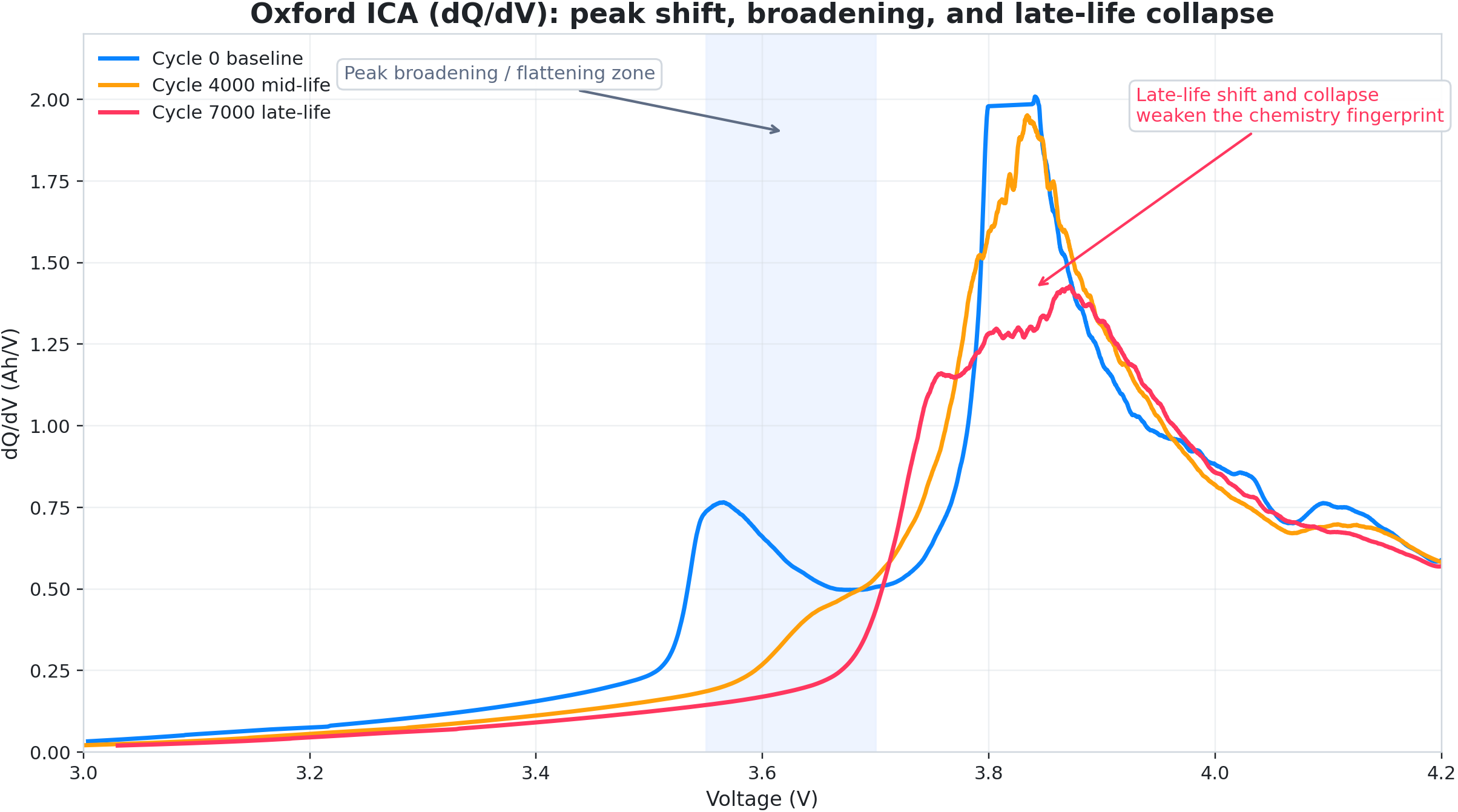
Chemistry evidence, full scale
The strongest public posture is evidence-consistent and disciplined: chemistry signal first, health trajectory second, intervention timing third. That is how plating-risk language stays serious.
Oxford / ICA
The chart that gives plating-risk language a serious electrochemical anchor instead of a theatrical one.
Dataset anchor
Oxford Battery Degradation Dataset
Evidence reference
Oxford ICA Peak Shift
Oxford / health
Plating risk becomes more believable when the chemistry signal is also shown eroding the health trajectory rather than standing as a one-off accusation.
Dataset anchor
Oxford Battery Degradation Dataset
Evidence reference
Oxford ICA Soh Proxy
Predictive maintenance
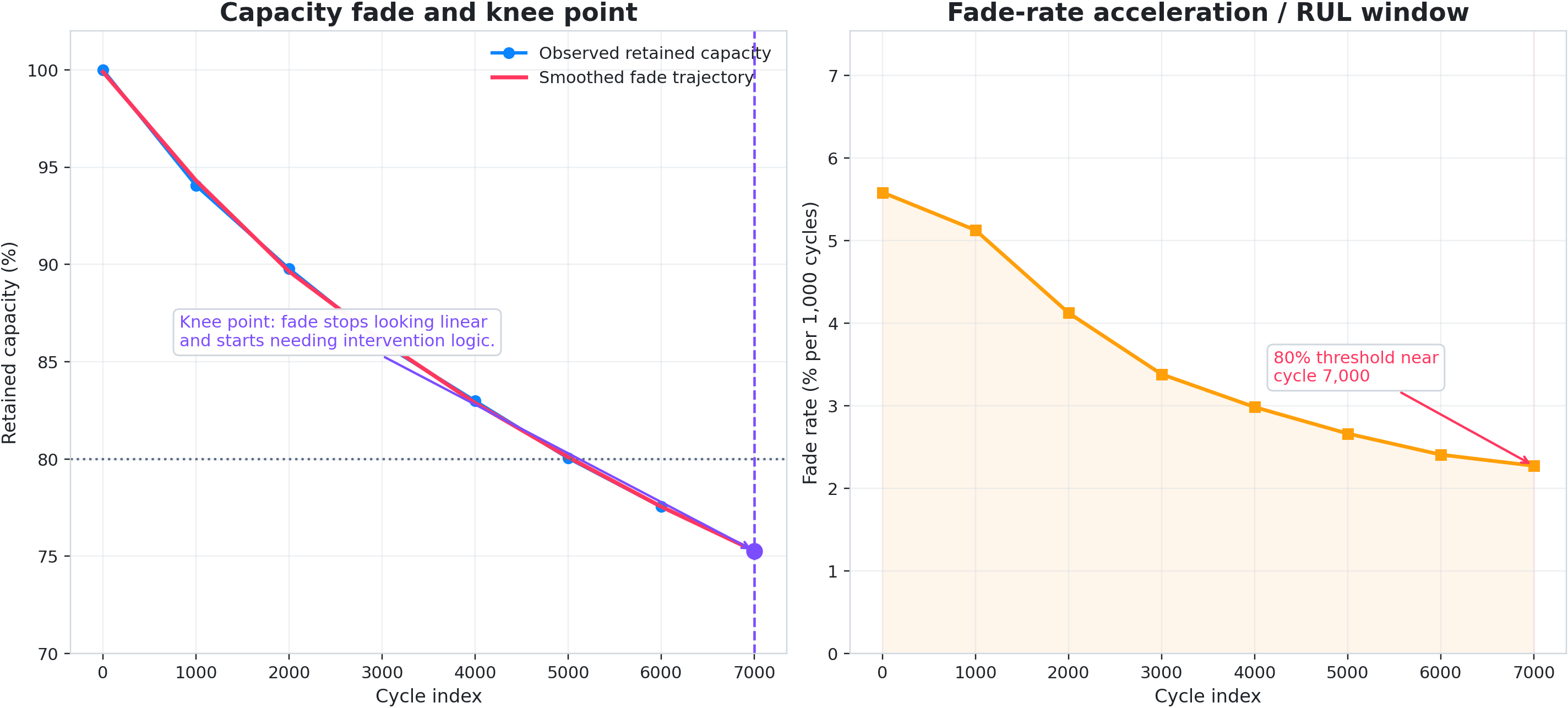
The slow-health view that tells the reader why chemistry stress matters before the asset slides into an accelerated decline regime.
Dataset anchor
Oxford Battery Degradation Dataset
Evidence reference
Oxford Knee Point Rul
Ordinary monitoring is designed for thresholds, alarms, and summary health views. It is not designed to explain subtle precursor behaviour in a way that buyers, insurers, or owners can defend.
Plating risk can change how an owner frames a claim, a renewal, or an insurer discussion. The value is often not only detection, but creating a stronger technical position before the argument hardens.
If the chemistry story is less clean than the data room suggests, plating-related evidence can change how a buyer thinks about downside, reserves, and post-close operating assumptions.
Scope first
Defined review scope
Boundary, telemetry window, and mandate question are pinned down before conclusions move.
Encrypted handling
Protected review workflow
Review traffic and operating data are handled with encrypted transfer and controlled access.
Customer boundary
Customer-controlled deployment
Managed, private, and isolated deployment paths are available when the environment requires them.
Direct accountability
Principal sign-off
Technical accountability stays close to the method rather than disappearing into a generic workflow.